
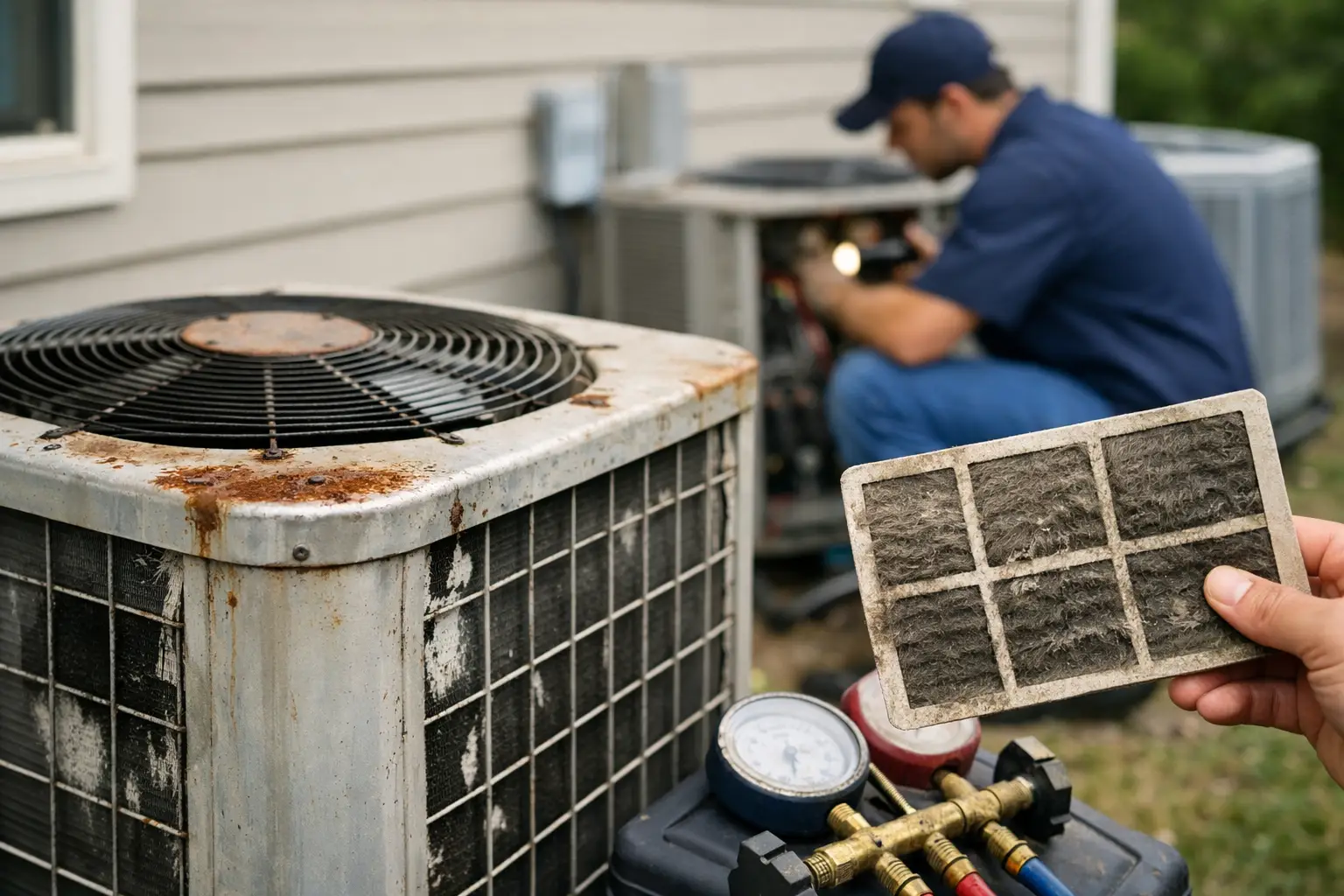
A central air conditioner that quits during a San Fernando Valley heat wave is hard to ignore. The more difficult decision comes earlier, when the system still runs but costs more, cools less evenly, and needs one repair after another. Knowing the signs central AC needs replacement can help you plan ahead instead of making a rushed decision on the hottest day of the year.
Replacement is not always the answer. A well-maintained system with a minor electrical, thermostat, or drainage issue may be an excellent candidate for repair. But when age, efficiency, reliability, and repair costs start working against you at the same time, investing in a new system can provide better comfort and more predictable operating costs.
1. Your AC Is 12 to 15 Years Old or More
Central air conditioners do not have a fixed expiration date. Installation quality, equipment type, maintenance history, and Southern California’s long cooling season all affect how long a unit lasts. Still, once a system reaches roughly 12 to 15 years old, it deserves a closer evaluation whenever a significant repair is needed.
Older equipment can continue operating, but parts may become harder to source and efficiency falls behind current standards. If the system has been reliable and only needs a modest repair, keeping it may make sense. If it is aging and developing recurring issues, replacement often becomes the more practical long-term choice.
2. Repairs Are Becoming Frequent or Expensive
One repair does not mean you need a new air conditioner. A failed capacitor, worn contactor, clogged condensate drain, or thermostat problem can often be corrected without replacing the system.
The concern is a pattern: a service call every season, multiple failed components, or a repair estimate that represents a substantial portion of the cost of new equipment. Major issues involving the compressor, evaporator coil, or refrigerant circuit deserve an honest repair-versus-replace conversation. A qualified technician should explain the condition of the full system, not simply quote the immediate repair.
For homeowners and property managers, reliability matters as much as the repair invoice. An older unit that repeatedly fails can disrupt tenants, staff, customers, and daily life even if each individual repair seems manageable.
3. Cooling Is Uneven From Room to Room
If one bedroom stays warm while the living room feels too cold, the problem may be more than an inconvenience. Uneven cooling can point to declining equipment performance, but it can also be caused by leaking ductwork, poor insulation, blocked vents, an improperly sized system, or airflow restrictions.
That distinction matters. Replacing an AC unit without addressing damaged ducts or undersized return air pathways can leave you with the same comfort problem. A professional evaluation should consider the equipment, duct system, thermostat location, airflow, and the layout of the property before recommending a replacement.
In larger homes and commercial spaces, zoning or a properly designed mini split solution may be worth discussing when certain areas have different cooling needs. The right answer depends on the building, not just the age of the existing unit.
4. Energy Bills Rise Without a Clear Reason
A noticeable increase in summer energy costs is one of the more common signs central AC needs replacement, especially when your usage habits have not changed. As components wear down, an older system may run longer to remove the same amount of heat. Dirty coils, low refrigerant, duct leaks, and poor airflow can also force the system to work harder.
Start with an inspection rather than assuming the equipment has failed. Maintenance or a targeted repair may restore performance. However, if the system is older and consistently inefficient despite proper service, a new high-efficiency unit may reduce wasted energy and deliver steadier cooling.
Savings should be viewed realistically. The amount depends on your existing system’s condition, local utility rates, thermostat settings, ductwork, insulation, and how often the building is occupied. A replacement should be selected for dependable comfort and appropriate capacity, not based on exaggerated utility-bill promises.
5. The System Runs Constantly but Does Not Keep Up
During very hot weather, it is normal for an air conditioner to run for longer periods. It is not normal for it to run almost continuously while the indoor temperature keeps climbing or never reaches the thermostat setting.
This may indicate an aging compressor, reduced refrigerant performance, a dirty coil, failing blower components, or a system that was never properly sized for the home or business. A system that is too small may struggle from the day it is installed, while one that is too large can short-cycle and leave humidity control and comfort uneven.
Proper sizing requires more than matching the capacity of the old unit. The property should be evaluated based on square footage, insulation, windows, sun exposure, ceiling height, occupancy, and duct design. Skilled installation starts with matching the equipment to the building’s actual needs.
6. You Hear New or Persistent Noises
Central AC systems make some sound during normal operation. What should concern you are sudden changes: grinding, screeching, banging, rattling, repeated clicking, or loud humming that was not there before.
A loose panel or worn motor part may be repairable. Other noises can signal more serious mechanical trouble. Turn the system off and arrange service if you hear loud or alarming sounds, particularly if they occur with weak airflow, burning odors, or frequent circuit breaker trips. Continuing to run damaged equipment can turn a repairable issue into a larger failure.
7. Refrigerant Leaks or Older Refrigerant Create Ongoing Problems
Refrigerant does not get used up like fuel. If your air conditioner is low, there is usually a leak that should be located and repaired. Simply adding refrigerant without addressing the leak is not a lasting solution.
For older systems, the refrigerant type can also affect the decision. Equipment using discontinued or increasingly costly refrigerants may be more expensive to maintain after a leak or major component failure. This does not automatically require replacement, but it is a key factor to weigh alongside system age and the cost of the repair.
A dependable contractor will explain the options clearly, including whether repair is still sensible and what replacement would involve. You should not be pressured into a new unit when a safe, cost-effective repair is available.
8. Indoor Air Feels Damp, Dusty, or Uncomfortable
Your central AC does more than lower the temperature. It also helps manage indoor humidity and supports airflow through the home or business. If rooms feel clammy, stale, excessively dusty, or difficult to cool, the issue may involve the air conditioner, filtration, ductwork, or ventilation.
A replacement can improve comfort when the existing equipment is no longer controlling temperature effectively. But indoor air concerns should be diagnosed carefully. New equipment alone will not correct neglected ducts, poor filtration practices, or underlying moisture issues.
How to Decide Between Repair and Replacement
The best decision usually comes down to four questions: How old is the system? How much will the repair cost? Has it been reliable? Will the repair meaningfully restore comfort and efficiency?
For a newer unit with a straightforward issue, repair is usually the sensible path. For an older system with expensive repairs, rising bills, poor cooling, or an outdated refrigerant, replacement may protect your budget from repeated service calls and reduce the risk of a mid-summer breakdown.
Ask for a clear explanation of the recommended equipment, installation scope, warranty coverage, and any duct or electrical work required. The lowest initial price is not always the best value if installation shortcuts affect performance, safety, or equipment life. A properly installed system using quality materials is built to serve the property for years.
Candid Heating & Air Conditioning provides straightforward evaluations for homeowners, property managers, and businesses throughout the Los Angeles area. Whether repair or replacement makes better sense, the goal should be the same: reliable cooling, appropriate equipment for your space, and a recommendation you can feel confident acting on before the next heat wave arrives.