
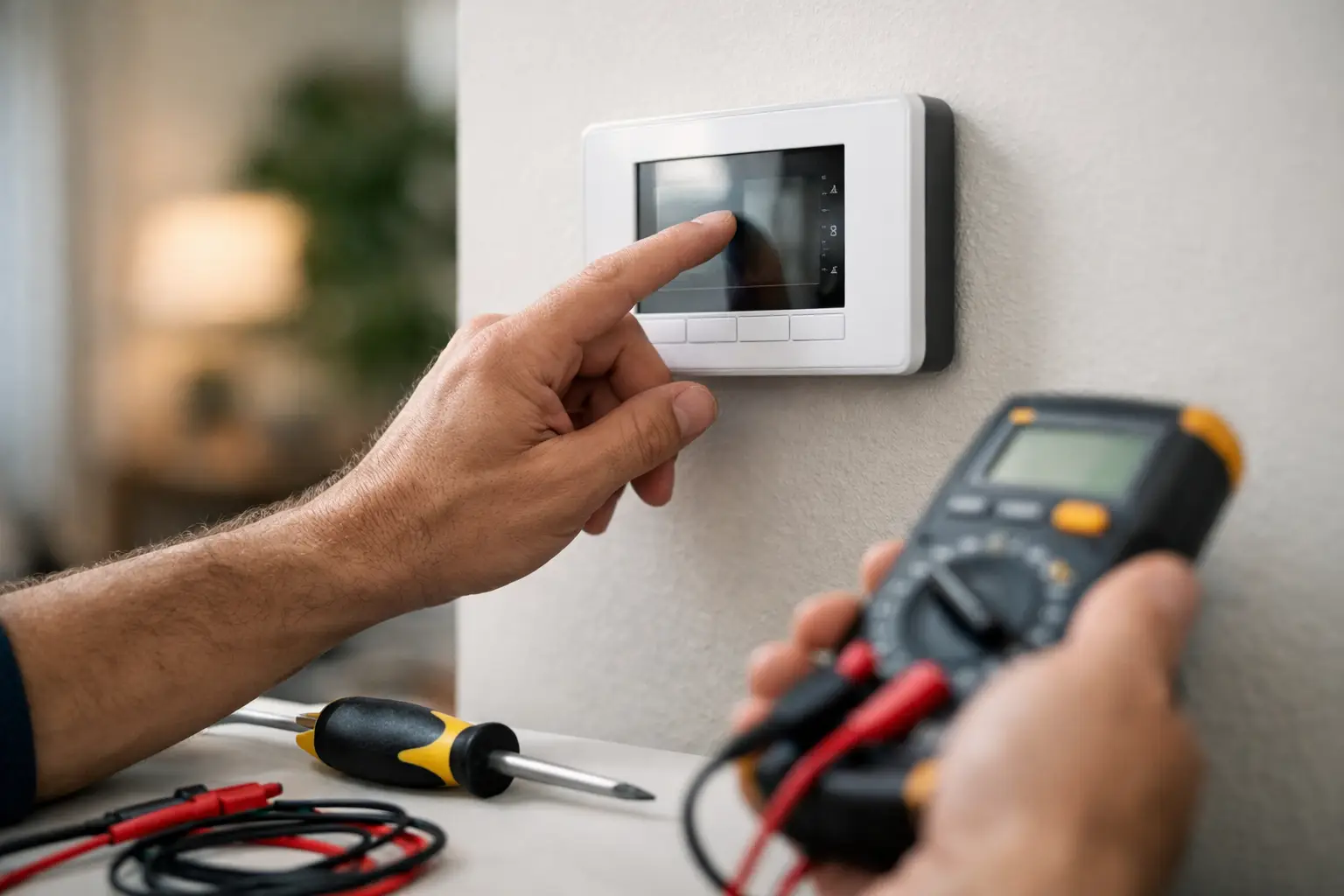
A thermostat can look perfectly normal while your home gets warmer, colder, or more uncomfortable by the hour. Before assuming the air conditioner or furnace has failed, take a few careful minutes to check the control that tells the system when to run. Knowing how to troubleshoot thermostat issues can help you identify a simple fix, avoid unnecessary disruption, and recognize when it is time for qualified HVAC service.
Start With the Thermostat Settings
Many service calls begin with a setting that was changed accidentally. Check that the thermostat is set to the correct mode: Cool for air conditioning, Heat for heating, or Auto if your system is designed to switch between the two. Set the temperature at least 3 to 5 degrees below the indoor temperature for cooling, or 3 to 5 degrees above it for heating.
If the thermostat is set correctly but the system does not start immediately, give it a few minutes. Many thermostats have a built-in delay that protects HVAC equipment from short cycling. This is especially common after changing from heating to cooling, after a power interruption, or when a system has just completed a cycle.
Also check the fan setting. Auto means the blower runs only when the heating or cooling system calls for it. On keeps the fan running continuously, which can make it seem as if the system is operating even when it is not actively heating or cooling. A continuously running fan is not always a problem, but it can point to an incorrect setting or, in some cases, a wiring or control issue.
Check the Power Supply and Batteries
A blank display is often the fastest clue. If your thermostat uses batteries, replace them with fresh batteries of the correct type. Even if the screen is still lit, weak batteries can cause unreliable communication, lost programming, or an unresponsive thermostat.
For a hardwired thermostat, inspect the HVAC-related breakers at the electrical panel. A tripped breaker can shut down power to the thermostat or the indoor air handler. Reset a breaker only once by moving it fully to the off position and then back on. If it trips again, do not keep resetting it. Repeated trips can signal an electrical problem that needs professional attention.
Some systems also have a service switch near the furnace, air handler, or attic access. It resembles a standard light switch and can be turned off by mistake during storage, cleaning, or other work around the equipment. Confirm it is in the on position before assuming the thermostat has failed.
Inspect the Thermostat Itself
Thermostats need accurate room conditions to control comfort properly. If yours is mounted near a sunny window, exterior door, kitchen appliance, supply vent, or lamp, it may read a temperature that does not represent the rest of the house. A thermostat that feels direct sunlight or cold air from a nearby vent can turn the system off too soon or keep it running longer than necessary.
Remove the front cover only if it is designed to come off easily. Dust, lint, and household debris can collect inside older mechanical thermostats and interfere with their operation. Use a soft brush or a gentle burst of compressed air. Do not spray cleaners, touch exposed terminals, or force any parts.
If you have a smart thermostat, confirm that it is connected to your home Wi-Fi only after checking the basic heating and cooling settings. Wi-Fi loss can affect remote access and scheduling, but it usually does not prevent the thermostat from controlling the HVAC system locally. Review the schedule as well. A programmed setback, vacation setting, or energy-saving routine may be changing the temperature when you do not expect it.
How to Troubleshoot Thermostat Issues When the System Will Not Run
If the display is on, the settings are correct, and the HVAC system still will not respond, work through the likely causes without taking risks.
First, check the air filter. A severely clogged filter can restrict airflow and cause some systems to shut down for protection. Replace a dirty disposable filter with the correct size and airflow rating. Avoid running the system without a filter, even briefly, because that allows dust to enter sensitive equipment.
Next, check whether the outdoor air conditioning unit is running when the thermostat calls for cooling. If the indoor fan runs but the outdoor unit does not, the problem may involve the condenser, electrical disconnect, capacitor, contactor, refrigerant controls, or thermostat wiring. These components should be evaluated by a licensed technician.
For heating, listen for the normal startup sequence. Depending on the system, you may hear the inducer motor, ignition sequence, and blower. If the furnace starts and stops repeatedly, produces no heat, or shows a flashing diagnostic light, do not bypass safety switches or attempt to relight equipment beyond the manufacturer’s instructions. A furnace safety shutdown is doing its job and should be diagnosed correctly.
Heat pumps add another variable. In Southern California, a heat pump may run for several minutes before the air feels noticeably warm, particularly on a cool morning. If the unit blows cool air in heat mode, runs constantly without reaching the set temperature, or makes unusual sounds, the issue may be related to the thermostat, reversing valve controls, airflow, or the heat pump itself.
Know When a Thermostat Is Not the Real Problem
A thermostat is the command center, but it cannot correct problems elsewhere in the system. If one room is always uncomfortable while the rest of the building is fine, the cause may be airflow balance, ductwork, insulation, return-air limitations, or an undersized system rather than the thermostat.
Likewise, short cycling is not automatically a thermostat failure. An air conditioner or furnace that turns on and off every few minutes could have a dirty filter, an oversized unit, a refrigerant issue, a blocked condensate drain, or a safety control problem. Replacing the thermostat without identifying the cause can spend money without solving the comfort issue.
Older thermostats can also be incompatible with newer HVAC equipment. Variable-speed systems, multi-stage furnaces, heat pumps, zoning controls, and whole-home humidity accessories often require specific wiring and programming. A basic thermostat may operate the system partially while leaving efficiency, comfort settings, or important equipment stages unused.
Signs You Should Stop Troubleshooting
Homeowners and property managers can safely handle simple setting, battery, and filter checks. Stop and call for service if you notice burning odors, sparking, loose wires, water around the indoor unit, repeated breaker trips, a gas smell, or a carbon monoxide alarm.
A gas odor requires immediate caution. Do not operate switches, light flames, or attempt repairs. Leave the area and follow the gas utility’s emergency instructions. For carbon monoxide alarms, move everyone to fresh air and contact emergency services as appropriate. These are safety situations, not thermostat adjustments.
You should also schedule professional diagnosis when the thermostat screen is blank after battery and power checks, when the HVAC system ignores temperature commands, or when new thermostat installation requires running wires. Low-voltage thermostat wiring may seem simple, but an incorrect connection can damage a control board, blow a fuse, or create ongoing system performance problems.
Prevent Future Thermostat Problems
Most thermostat concerns are easier to prevent than to diagnose during a heat wave or cold evening. Replace batteries on a predictable schedule if your model uses them, keep the area around the thermostat clear, and change filters regularly. During routine HVAC maintenance, have the technician verify thermostat calibration, wiring connections, system staging, and temperature differential.
For rental properties and commercial spaces, it also helps to keep control access clear. Staff members, tenants, or visitors may change settings without realizing the impact on the entire system. A simple thermostat cover or a clear operating policy can prevent unnecessary overrides while still keeping occupants comfortable.
When a thermostat problem affects your comfort, the right answer may be a minor adjustment or a deeper HVAC repair. Candid Heating & Air Conditioning can help homeowners and businesses across the San Fernando Valley determine which it is, explain the options clearly, and restore dependable heating or cooling without guesswork.