
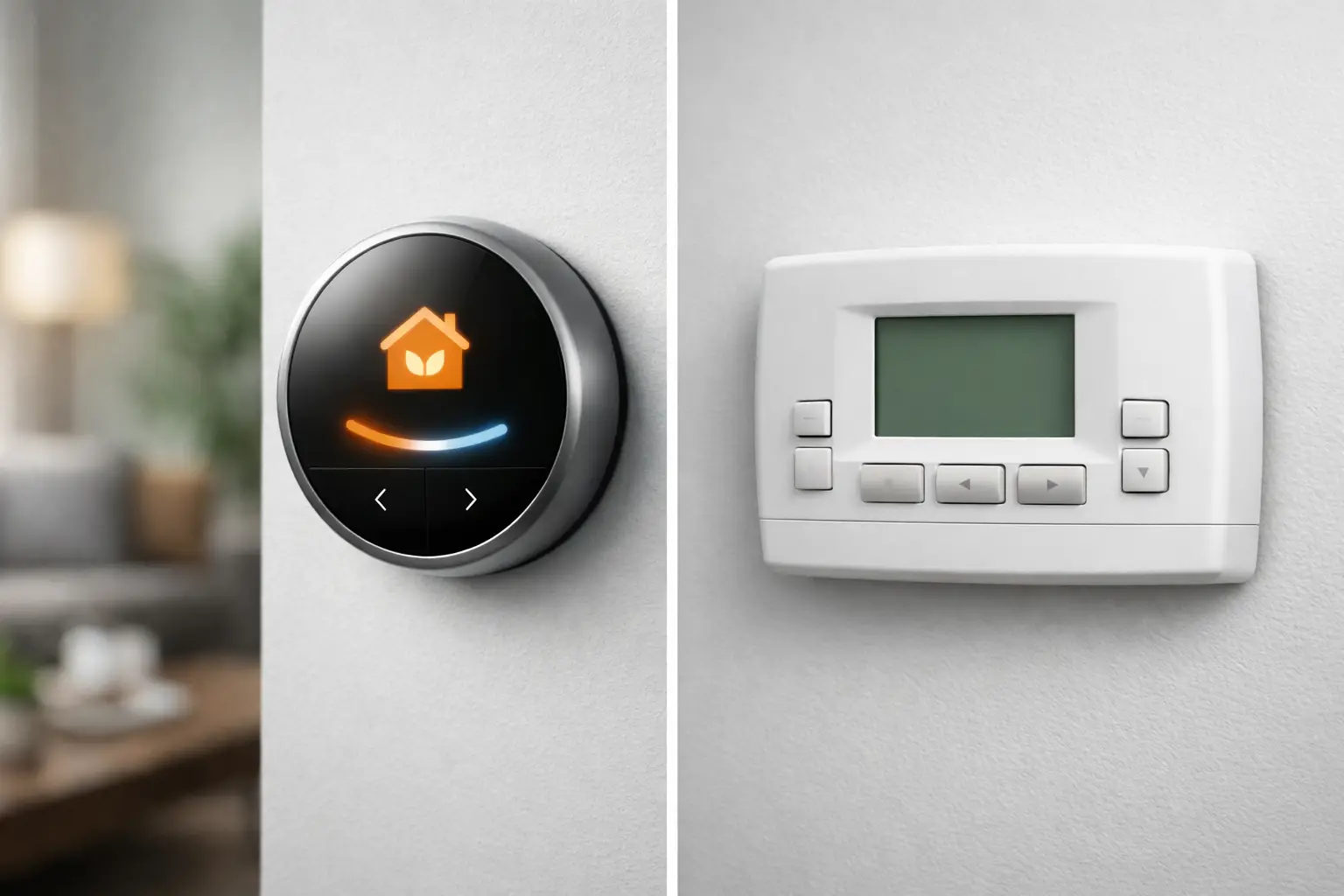
A thermostat may be a small part of your HVAC system, but it has a direct effect on comfort, energy use, and how hard your equipment works. When comparing a smart thermostat vs programmable thermostat, the best choice is not always the newest model. It is the one that works correctly with your heating and cooling equipment, your schedule, and the way you use the property.
For a busy household in the San Fernando Valley, a smart thermostat can add useful control during hot afternoons and changing schedules. For a rental property, office, or homeowner who prefers a set-it-and-forget-it approach, a programmable model may be the more practical and cost-effective answer. Here is how to make the decision with long-term HVAC performance in mind.
Smart Thermostat vs Programmable Thermostat: The Main Difference
Both thermostat types allow you to set temperatures for different times of day. That is the basic feature that can reduce unnecessary heating and cooling when a home or building is empty, or when everyone is asleep.
A programmable thermostat follows a schedule that you create. For example, you might set the air conditioner to run at 76 degrees before you wake up, raise the setting while the house is empty, then return to a comfortable temperature before you arrive home. Most models offer daily or weekly scheduling, with controls located on the thermostat itself.
A smart thermostat also schedules temperatures, but connects to Wi-Fi and is usually controlled through a phone app. Depending on the model, it may provide remote adjustments, maintenance reminders, weather information, energy reports, occupancy sensing, and learning features that adapt to household routines.
The difference is convenience and automation, not the ability to heat or cool on its own. Neither type can correct an undersized air conditioner, a failing furnace, poor ductwork, or an equipment issue. It is still a control device, and the HVAC system behind it must be properly installed and maintained.
When a Programmable Thermostat Makes Sense
A programmable thermostat is often the right fit for customers who have a predictable routine and want dependable control without extra technology. It is generally less expensive to purchase and easier to operate for people who prefer physical buttons over apps, account setup, and Wi-Fi connections.
It can be especially useful in a home where occupants leave and return at consistent times. The same can apply to smaller offices, storefronts, and certain rental units with regular operating hours. Once the schedule is set properly, a programmable thermostat can maintain comfort without requiring daily adjustments.
This option also has fewer connected features to manage. There is no concern about a weak Wi-Fi signal, app updates, or whether every family member knows how to use a specific platform. If the goal is simple scheduling at a reasonable cost, a quality programmable thermostat does that job well.
There is one common drawback: many people never program them. A thermostat with a useful schedule only saves energy if the schedule matches real life. If weekends, work hours, and travel plans change often, repeatedly updating the programming can become a hassle. That is where a smart model becomes more appealing.
Where Smart Thermostats Add Value
A smart thermostat is designed for households and facilities with changing schedules. Remote access is its most useful advantage. If you leave for the day and forget to adjust the temperature, you can make the change from your phone. If you are returning early from a trip, you can begin cooling or heating the space before you arrive.
In Southern California, that flexibility can be valuable during heat waves. Rather than running the air conditioner all day in an empty house, you can use a higher setting while away and bring the temperature down closer to arrival time. The goal is not to constantly turn the system on and off, but to avoid conditioning an empty space more than necessary.
Some smart models use sensors or phone location settings to recognize when people are home or away. Others provide energy reports that show when the system ran most often. These features can help identify habits that increase utility costs, such as lowering the thermostat too far on hot days or running heating and cooling longer than needed.
Smart thermostats may also be helpful for property managers. With permission and appropriate setup, remote control can make it easier to manage temperatures in vacant units or address an issue without immediately visiting the property. However, tenant privacy, access permissions, and clear policies should always be considered before installing connected controls in a rental or commercial space.
Cost Is More Than the Thermostat Price
Programmable thermostats usually cost less upfront. Smart thermostats cost more because they include Wi-Fi components, app support, and advanced features. The price difference may be worthwhile when remote control and flexible scheduling are used regularly, but buying the most expensive thermostat does not guarantee meaningful savings.
Actual energy savings depend on several factors: the age and efficiency of the HVAC equipment, insulation, duct condition, thermostat settings, window exposure, occupancy, and local weather. A smart thermostat cannot make an old air conditioner perform like a high-efficiency replacement system. It can, however, help a properly functioning system avoid unnecessary runtime.
Installation should also be part of the budget. Some thermostats are simple replacements, while others require additional wiring, configuration, or equipment adjustments. If a thermostat is not installed correctly, it can cause short cycling, incorrect staging, weak heating or cooling performance, or communication problems with the system.
Compatibility Comes Before Features
Before choosing either thermostat, confirm that it is compatible with your equipment. This is particularly important for heat pumps, multi-stage systems, dual-fuel equipment, zone controls, humidifiers, dehumidifiers, and newer communicating HVAC systems.
Many smart thermostats need a common wire, often called a C-wire, to receive continuous power. Some systems already have one, while others need a new wire, an adapter, or a different thermostat selection. Trying to force an incompatible thermostat onto existing wiring can lead to intermittent operation or damage to sensitive control components.
The thermostat must also be configured for the equipment it controls. A heat pump needs different settings than a conventional gas furnace and air conditioner. Multi-stage heating and cooling systems need controls that can call for the proper stage at the proper time. Incorrect setup can reduce comfort and make equipment run less efficiently.
This is why professional thermostat installation is often worthwhile, especially when replacing an older control or upgrading equipment. An experienced technician can verify wiring, test the system, confirm staging, and make sure heating and cooling respond as they should.
Ease of Use Matters More Than Extra Features
The best thermostat is one that the people using the building understand. A smart thermostat offers more options, but too many settings can be frustrating if no one is comfortable using the app. A programmable thermostat is simpler, but it may not suit a family whose schedule changes from week to week.
Consider who will manage the temperature settings. If one person regularly uses a smartphone and wants visibility into energy use, a smart thermostat may be a good fit. If several people need a straightforward wall control, or if reliable simplicity is the priority, a programmable thermostat may be the better choice.
For commercial properties, the answer may depend on the operating schedule and who has authority to change settings. Some businesses benefit from remote monitoring and scheduling. Others need a durable, easy-to-operate control that staff cannot accidentally override.
Choosing the Right Thermostat for Your Property
Choose a programmable thermostat when your schedule is consistent, you want a lower initial cost, and you prefer simple controls. It provides practical temperature scheduling without depending on a phone, internet connection, or advanced setup.
Choose a smart thermostat when your schedule changes often, remote access would be useful, and your HVAC system is compatible with the model you want. It is also a strong option for homeowners who want clearer insight into how their heating and cooling habits affect energy use.
If you are replacing an aging air conditioner, furnace, heat pump, or mini-split system, thermostat selection should be part of the installation conversation. The correct control helps the system deliver the comfort and efficiency it was designed to provide. Candid Heating & Air Conditioning can assess your equipment and recommend a thermostat that fits your system, property, and budget.
A thermostat upgrade should make comfort easier, not create a new source of frustration. Start with compatibility, choose features you will actually use, and have the installation checked by a qualified HVAC professional so your system can operate safely and reliably.