A Sherman Oaks cold snap can expose a furnace problem quickly. One evening, the system runs normally. The next, rooms feel uneven, the thermostat will not hold its setting, or the furnace starts and stops without producing enough heat. Waiting for a complete breakdown can turn a manageable repair into an urgent comfort and safety concern.
For dependable furnace repair Sherman Oaks property owners can rely on, the first step is recognizing when a system needs professional attention. Furnaces often give warning signs before they fail. Addressing them early can help protect your equipment, reduce unnecessary energy use, and keep your home or business comfortable when temperatures drop.
Signs Your Furnace Needs Professional Attention
A furnace does not need to stop working entirely to need service. Some issues are obvious, such as no heat at all. Others develop gradually and are easier to overlook until they affect comfort, utility costs, or indoor air quality.
Pay attention if your furnace makes new or unusually loud sounds. A brief click at startup can be normal, but banging, rattling, squealing, grinding, or repeated popping should be checked. These sounds can point to loose components, a failing blower motor, ignition trouble, duct issues, or worn internal parts.
Uneven heating is another common concern. If one room is warm while another remains cold, the cause may be a furnace issue, restricted airflow, duct leakage, thermostat trouble, or an improperly sized system. A qualified technician can identify the real source rather than replacing parts based on guesswork.
Short cycling deserves prompt service as well. This is when the furnace turns on, runs briefly, shuts off, and repeats the cycle. A dirty filter can contribute to the problem, but so can overheating, a malfunctioning flame sensor, thermostat errors, or airflow restrictions. Frequent cycling adds wear to the equipment and may raise operating costs.
Other warning signs include a yellow or flickering burner flame, a burning or musty smell that does not go away, a sudden increase in gas or electric bills, weak airflow from vents, or a carbon monoxide detector alert. If you suspect a gas leak or carbon monoxide issue, leave the building, avoid operating electrical switches, and contact the appropriate emergency service provider before scheduling HVAC work.
Why Timely Furnace Repair in Sherman Oaks Matters
Southern California winters are milder than those in many parts of the country, but a dependable heating system still matters. Homes can feel uncomfortably cold overnight, especially in rooms with poor insulation or limited sun exposure. For businesses, inadequate heat can affect employees, tenants, customers, and equipment.
Prompt repair is not only about restoring warmth. A furnace that struggles to run efficiently may consume more energy while delivering less heat. Restricted airflow, dirty burners, aging electrical components, and poor calibration can force the system to work harder than necessary. Early service may prevent a minor issue from putting added strain on major parts such as the blower motor, heat exchanger, or control board.
Safety is equally important. Gas furnaces involve combustion, venting, electrical connections, and safety controls that need to work together correctly. A professional inspection can check for proper ignition, venting concerns, fuel-related issues, worn wiring, and components that may affect safe operation. This is not a job for trial-and-error repairs or online troubleshooting beyond basic homeowner checks.
What You Can Check Before Calling
There are a few simple checks that can save time and help clarify the issue. Make sure the thermostat is set to heat and that its temperature setting is above the current room temperature. If the thermostat uses batteries, replace them if the display is blank or unresponsive.
Next, check the furnace filter. A heavily clogged filter can limit airflow and contribute to overheating or weak heat delivery. Replace it with the correct size and type recommended for your system. Also confirm that supply vents are open and not blocked by furniture, rugs, or stored items.
Check the circuit breaker if the furnace will not turn on, but do not repeatedly reset a breaker that trips again. Repeated tripping can indicate an electrical issue that requires professional diagnosis. If your furnace has an accessible power switch nearby, make sure it has not been turned off accidentally.
These checks are appropriate for routine operation. Do not remove panels, attempt to relight or adjust gas components unless you have clear manufacturer instructions and experience, or bypass safety switches. If the problem continues, a trained HVAC technician should take over.
What a Proper Furnace Service Visit Should Include
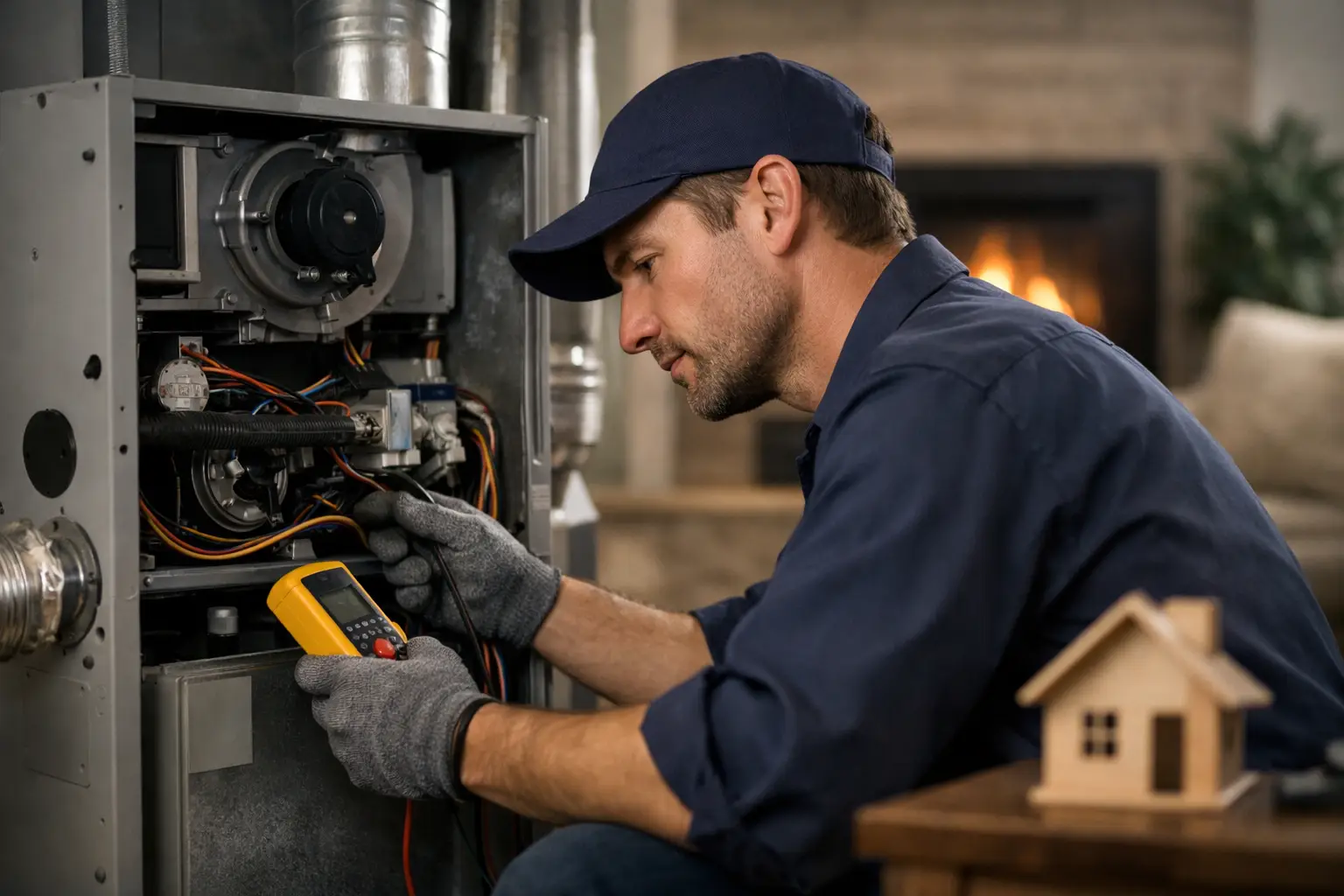
Reliable repair begins with diagnosis, not assumptions. A technician should listen to your description of the issue, inspect the equipment, test its operation, and explain what was found in clear terms. The goal is to identify the underlying cause, whether it is a failed igniter, dirty flame sensor, worn capacitor, blower problem, thermostat issue, airflow restriction, or another condition.
A thorough visit may include checking electrical connections, safety controls, burners, ignition operation, blower performance, filter condition, venting, and thermostat communication. The exact scope depends on the furnace type and symptoms. For example, a system that will not start requires a different diagnostic approach than one that heats but cycles too often.
Before repairs begin, you should receive a straightforward explanation of recommended work and expected costs. Honest service means separating what is necessary now from what may be worth monitoring later. It also means recommending repairs that make sense for the age, condition, and expected remaining life of the system.
Candid Heating & Air Conditioning provides licensed and insured HVAC service with experienced technicians who can assess furnace concerns carefully and recommend practical next steps for homes and commercial properties.
Repair or Replacement: How to Make the Right Call
Not every furnace problem means replacement is the best answer. Many systems can continue serving a property well after a targeted repair, especially when they have been maintained and the issue is isolated. An igniter, flame sensor, thermostat, or electrical component may be repairable without replacing the entire unit.
Replacement becomes a stronger consideration when the furnace is older, needs frequent repairs, has a major component failure, or no longer provides dependable comfort. A cracked heat exchanger, for example, is a serious issue that may change the decision. So can repeated breakdowns that create ongoing expense and disruption.
Efficiency is part of the discussion, but it should not be the only factor. A newer furnace may reduce energy use, yet the right choice depends on repair cost, equipment condition, installation quality, property size, ductwork, and how long you expect to remain in the building. A properly selected and professionally installed replacement should match the property rather than simply being the largest or least expensive option available.
For landlords and business operators, downtime can also affect the decision. A repair may be reasonable for a system with solid overall condition, while replacement may offer greater predictability for a property where reliable heat is essential for tenants, staff, or customers.
Preventing Future Heating Problems
Maintenance cannot prevent every failure, but it gives a technician an opportunity to spot wear before it becomes a no-heat call. Seasonal service helps keep filters, burners, ignition components, electrical connections, and airflow-related parts under review. It can also support more consistent performance and help extend the useful life of your equipment.
Homeowners should replace filters on a regular schedule based on the filter type, household conditions, pets, and system use. Keep the area around the furnace clear, avoid blocking return vents, and respond to new sounds or performance changes instead of waiting for the system to fail.
Commercial properties may need a more structured maintenance plan because usage patterns, occupancy, multiple zones, and larger equipment can create different demands. Property managers benefit from scheduling service before the heating season rather than reacting to tenant complaints after a system has already failed.
Choose Service That Puts Safety and Comfort First
When your furnace is unreliable, the best next step is not guessing at the cause. It is arranging a professional inspection from a contractor that treats your comfort, safety, and budget with respect. Clear communication, qualified workmanship, and a repair recommendation based on the condition of your actual system can make a difficult heating problem far more manageable.
If you notice weak heat, unusual cycling, new noises, or a furnace that will not start, act before the next cold evening turns a warning sign into an emergency.