
A hot San Fernando Valley afternoon can expose every weakness in an older cooling system. One bedroom stays warm, the living room gets too cold, and the utility bill rises anyway. When comparing ductless versus central air, the right answer is not simply which system is newer or less expensive. It is the system that fits your property, existing equipment, comfort priorities, and plans for the years ahead.
Both options can provide reliable, efficient cooling when they are properly sized and professionally installed. The key is understanding where each system performs best before making a major HVAC investment.
Ductless Versus Central Air at a Glance
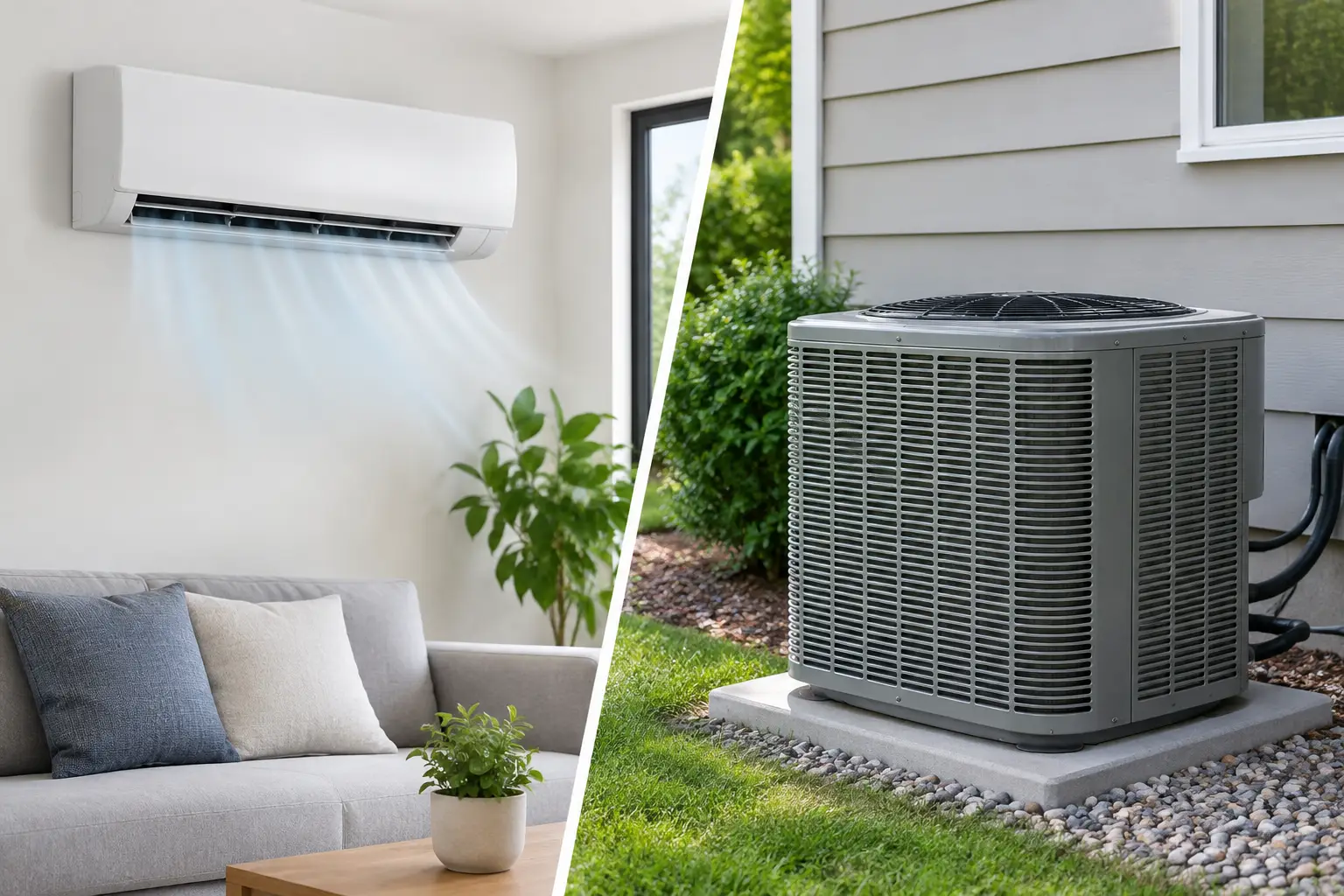
Central air conditioning uses one outdoor condenser and an indoor air handler or furnace to move cooled air through a network of ducts. It is designed to cool multiple rooms from a single, centrally managed system. Most homes built with existing ductwork are already set up for this approach.
A ductless mini-split system uses an outdoor unit connected to one or more indoor air handlers. Each indoor unit serves a designated room or zone and is controlled independently. Small refrigerant lines run between the indoor and outdoor equipment, so the system does not need traditional supply and return ducts.
The practical difference is control. Central air generally cools the home as a whole, while ductless equipment lets occupants set temperatures room by room. That flexibility is valuable in some properties, but it does not automatically make ductless the better choice for every home.
When Central Air Is the Better Fit
Central air is often the most sensible option for a home that already has ducts in good condition. Replacing an aging air conditioner while keeping a functional duct system can be more straightforward than converting the entire home to separate ductless zones.
It also offers a clean, familiar appearance. Conditioned air enters through ceiling, wall, or floor registers, while the main equipment stays out of sight. For homeowners who prefer not to have wall-mounted indoor units in bedrooms or living spaces, this is a meaningful advantage.
Central systems can work especially well for larger homes with open layouts and consistent occupancy. If the household typically wants the entire home comfortable at the same time, one properly designed central system may deliver dependable results without the need to manage multiple room controls.
Duct condition makes a major difference
Existing ducts should not be assumed to be efficient just because they are present. Leaks, poor insulation, crushed sections, and undersized returns can reduce comfort and waste energy. In Southern California attics, ductwork is often exposed to significant summer heat, which makes proper sealing and insulation even more important.
If ducts need extensive repair or replacement, the cost comparison can change. A professional evaluation should include the duct system, not just the age of the outdoor air conditioner.
Central air can support whole-home filtration
A central HVAC system can accommodate upgraded filtration and certain indoor air quality accessories more easily than many single-zone ductless installations. That can matter for households concerned about dust, pet dander, or seasonal allergens. The system still needs regular filter changes and maintenance, but the central return system gives you one primary point of filtration.
When Ductless Mini-Splits Make More Sense
Ductless systems are often an excellent solution where ducts do not exist or do not reach the space that needs cooling. A garage conversion, home addition, detached office, sunroom, or recently finished attic can be costly to connect to a central system. A ductless unit can provide targeted comfort without opening large areas of walls and ceilings to install new ducts.
They are also useful when different people need different temperatures. A bedroom that overheats at night, an upstairs room with strong afternoon sun, or a lightly used guest room can be controlled separately from the rest of the home. Instead of cooling every room to solve one hot spot, a ductless zone allows cooling where it is actually needed.
Because ductless systems avoid duct losses, they can be very efficient. Many models use variable-speed technology, allowing the equipment to adjust output rather than cycling only at full capacity. Efficiency, however, depends on correct sizing, quality installation, and realistic use habits. Leaving every zone running at very low temperatures will still increase operating costs.
Placement affects comfort and appearance
Indoor units need thoughtful placement. They must have room for air to circulate, access for service, and a clear path for condensate drainage and refrigerant lines. A unit placed in the wrong location may blow air directly onto a bed, miss part of the room, or become visually distracting.
There are alternatives to high-wall units, including ceiling cassettes and concealed ducted mini-split options. Each has different installation requirements and costs. A knowledgeable contractor should walk the property and explain which layout will provide even comfort without compromising the room.
Cost: Look Beyond the Equipment Price
The up-front cost of ductless versus central air depends heavily on the scope of work. A single ductless unit for one room may cost less than installing or replacing a full central system. A multi-zone ductless system serving an entire house, however, can become a significant investment because each zone needs indoor equipment, controls, line-set routing, electrical work, and installation labor.
Central air replacement may be cost-effective when the ductwork, electrical service, and indoor equipment are compatible. But if ducts are badly damaged, inaccessible, or improperly designed, those corrections need to be included in the real project cost.
Operating cost should be considered over time. Ductless zoning can reduce wasted cooling in unused rooms. Central air may be economical for families who consistently occupy most of the home. The best estimate is based on your home’s layout, insulation, windows, sun exposure, occupancy, and current system condition, not a generic price chart.
Heating Matters in Southern California Too
Many ductless mini-splits are heat pumps, meaning they provide both air conditioning and heating. Southern California’s relatively mild winters can make a heat pump an efficient all-electric option for many homes. This can be particularly appealing when replacing window units, electric resistance heaters, or an older system that no longer performs reliably.
Central systems can also use heat pump technology, often paired with existing ductwork. If your home has a gas furnace that is in good shape, a central air conditioner may remain the practical choice. If the furnace is near the end of its service life, it may be wise to evaluate a matched heat pump system or another long-term heating plan at the same time.
The right decision depends on current equipment, utility costs, comfort expectations, and whether you want to modernize heating and cooling together.
Installation Quality Is Not Optional
Even high-quality equipment can disappoint when installation details are overlooked. Oversized equipment can short-cycle, which can leave humidity control and comfort uneven. Undersized equipment may run continuously on the hottest days without reaching the desired temperature. Poor refrigerant charging, inadequate electrical work, unsealed ducts, or incorrect drainage can lead to avoidable repairs and reduced system life.
For central air, proper duct design, airflow testing, and thermostat placement matter. For ductless systems, the contractor should calculate each zone’s load instead of choosing capacity based only on room square footage. Windows, ceiling height, insulation, kitchen heat, and sun exposure all affect the equipment a room needs.
Permits and manufacturer requirements should also be handled correctly. Licensed, insured HVAC professionals help protect the investment and ensure the system is installed for safe, dependable operation.
Questions to Ask Before You Choose
Start with the spaces that are uncomfortable and why they are uncomfortable. If one room is hot because the duct is disconnected or undersized, repairing the central system may solve the problem. If a new addition has no practical path for ducts, ductless may be the clear answer.
Consider how you use the home. Do you want one thermostat for the entire property, or would room-by-room control make a real difference? Are your existing ducts sound and accessible? Is your furnace worth keeping? Do you plan to remodel, add living space, or convert a garage in the near future?
A complete consultation should answer these questions with actual measurements and options, not a one-size-fits-all recommendation. Candid Heating & Air Conditioning can assess your existing system, ductwork, and comfort concerns to help identify an approach that fits your home and budget.
The best cooling system is the one that quietly keeps your home comfortable on the days you need it most. Choose the option that solves the actual problem, then protect that investment with professional installation and regular maintenance.