
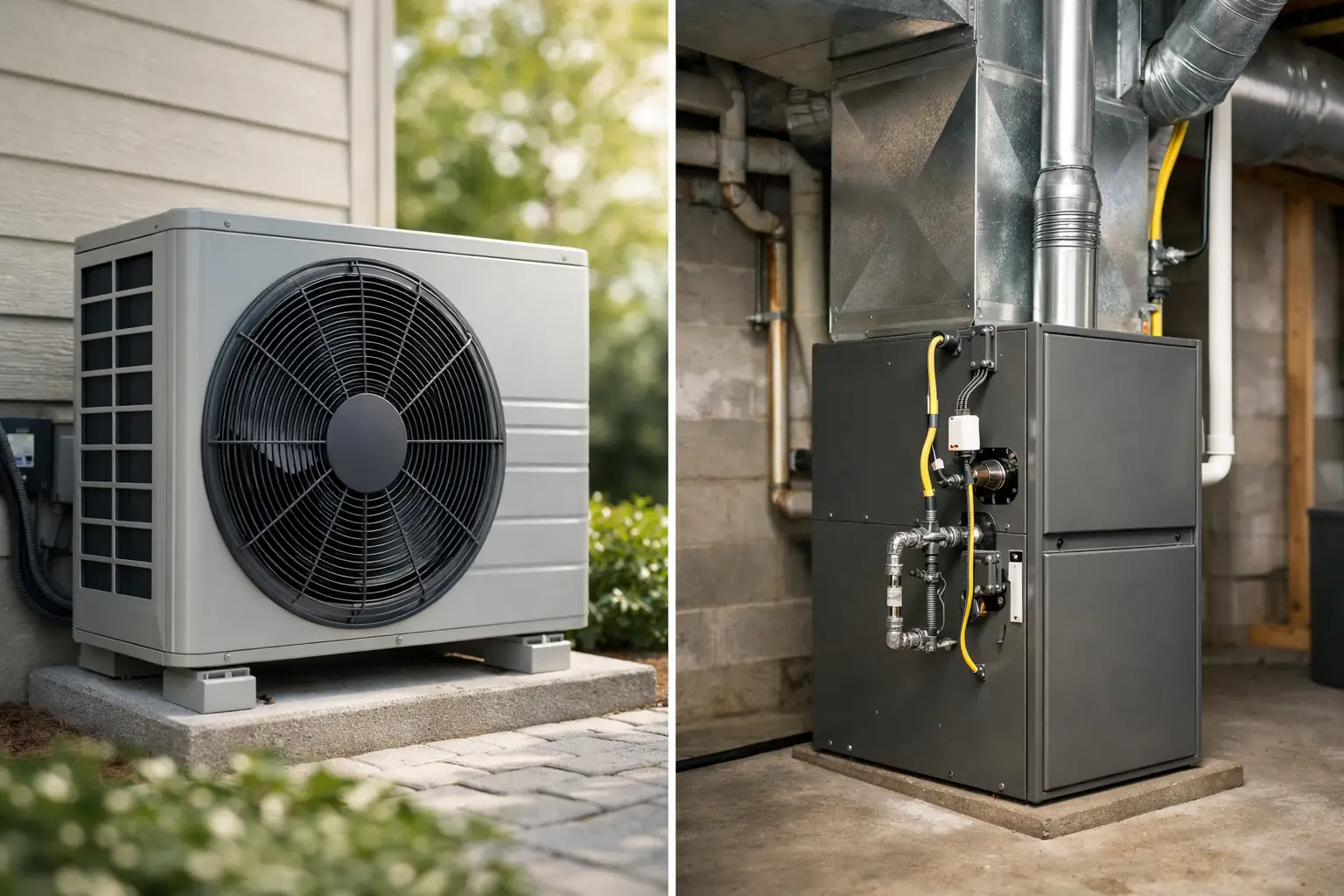
If your current heater is struggling, making noise, or driving up utility bills, the heat pump vs furnace question stops being theoretical very quickly. For Southern California property owners, the right answer depends on how you use the building, how long you plan to keep it, and whether you want heating only or year-round comfort from one system.
A lot of people assume a furnace is always the safer choice because it has been common for decades. Others hear that heat pumps are more efficient and assume they are automatically better. The truth is less absolute. Both systems can be a smart investment when they are matched to the property, installed correctly, and maintained by qualified technicians.
Heat pump vs furnace: the basic difference
A furnace creates heat. In most homes, that means burning natural gas to warm air and distribute it through ductwork. Electric furnaces exist too, but gas furnaces are far more common when people compare a furnace to a heat pump.
A heat pump works differently. It does not generate heat in the same way. It moves heat from one place to another. In heating mode, it pulls outdoor heat and transfers it indoors. In cooling mode, it reverses the process and works like an air conditioner.
That distinction matters because it affects energy use, installation cost, comfort, and long-term value. A furnace is a dedicated heating system. A heat pump handles both heating and cooling.
Why climate matters more than most people think
In Southern California, climate changes the conversation. Winters in places like Northridge, Sherman Oaks, and Burbank are usually mild compared to colder parts of the country. That often makes heat pumps more attractive here than they would be in harsher climates.
A heat pump tends to perform very well in moderate temperatures. Since our winters are generally not extreme, many homeowners can heat their space efficiently with a modern heat pump and avoid relying on gas heat as much or at all.
A furnace still has clear strengths. If you prefer hotter supply air, need fast heat on cold mornings, or already have a solid gas setup and duct system in place, a furnace can still be the more practical option. Commercial properties and larger homes may also prioritize the strong heating output that a furnace can deliver.
Upfront cost vs long-term operating cost
When customers compare systems, cost usually means two different things. There is the price to install the equipment, and there is the cost to run it over time.
A furnace replacement can be less expensive upfront if your home already has gas service, venting, and compatible ductwork. If you are replacing an older furnace with a similar model, the project is often more straightforward.
A heat pump can cost more initially, especially if the job includes electrical upgrades, thermostat updates, or duct modifications. But because it provides both heating and cooling, it may replace the need for a separate furnace and air conditioner setup. That changes the value equation.
Operating cost depends on utility rates and how the system is used. In mild climates, heat pumps are often very efficient. They can use less energy than a furnace for the same comfort level. On the other hand, if gas prices are favorable and the building needs strong heating for limited periods, a furnace may still be cost-effective.
This is where honest system sizing and load calculations matter. The cheapest bid does not always produce the lowest ownership cost.
Comfort feels different with each system
Homeowners do notice a difference in how these systems feel.
A furnace usually delivers warmer air at the vents. That can create a faster sense of heat, which some people prefer, especially early in the morning or during a cold snap. If comfort to you means strong, immediate warmth, a furnace often wins that category.
A heat pump usually produces a gentler, steadier heat. The air coming from the vents may feel cooler than furnace air even when the home is warming properly. Some people love that even temperature control. Others think it feels less powerful.
Neither reaction is wrong. It comes down to expectations, insulation quality, airflow design, and the condition of the duct system. A properly installed system should maintain comfort without excessive cycling, hot and cold spots, or constant thermostat adjustments.
Efficiency and environmental impact
Heat pumps are widely known for efficiency, and for good reason. Because they move heat rather than create it through combustion, they can be very energy efficient in the right conditions. That is one reason they have gained so much attention in California.
They also do not burn fuel inside the home, which can appeal to property owners who want to reduce on-site combustion and simplify the system.
Furnaces can still be highly efficient, especially newer high-efficiency models. But even a very efficient furnace operates differently from a heat pump. It burns fuel to create heat, which means venting, combustion components, and gas line considerations stay part of the system.
If energy efficiency is your top priority and your property is a good fit, a heat pump often deserves a close look. If heating performance, existing gas infrastructure, and installation simplicity matter more, a furnace may still be the better choice.
Installation complexity and what can change the decision
On paper, comparing equipment is easy. In the field, the property often decides more than the brochure does.
If the ductwork is undersized, leaking, or poorly laid out, either system will disappoint. If the electrical panel is limited, a heat pump installation may require additional work. If venting is outdated or the gas connection is questionable, a furnace replacement may not be as simple as expected.
This is why experienced HVAC contractors look beyond the model number. They evaluate the building, the insulation, the duct design, and the way the space is actually used. A homeowner who works from home all day may prioritize steady efficiency. A property manager may focus on reliability and serviceability across multiple units. A business owner may care most about consistent performance during operating hours.
The right recommendation should fit the property and the budget, not just a trend.
Maintenance and repair expectations
Both systems need regular maintenance if you want dependable performance.
A furnace should be inspected for burner operation, heat exchanger concerns, airflow restrictions, ignition issues, and safety controls. Gas systems need professional attention because combustion safety is not something to guess about.
A heat pump also needs ongoing service. Refrigerant levels, coils, electrical components, reversing valve operation, and airflow all affect performance. Because it works in both heating and cooling modes, it runs year-round and should be maintained accordingly.
Neither option is maintenance-free. The better question is whether you have a dependable HVAC company that will service the equipment properly and catch small issues before they become expensive ones.
Heat pump vs furnace for Southern California homes
For many homes in the Los Angeles area and the San Fernando Valley, a heat pump makes practical sense because winters are mild and air conditioning is just as important as heating. If you are replacing both an AC unit and an older heater, a heat pump can be a strong all-in-one solution.
A furnace may still make sense if your current AC system is in good shape and only the heating side needs replacement. It can also be a good fit if you strongly prefer the feel of gas heat or want to keep your setup closer to what the building already supports.
In some cases, the best answer is not choosing one technology as universally better. It is choosing the system that solves your comfort issues without creating new cost or performance problems.
When to lean toward a heat pump
A heat pump is often the better fit when you want one system for heating and cooling, your property is in a mild climate, and efficiency is high on your priority list. It is also worth considering if your current equipment is aging on both sides and you would rather invest in a modern replacement than keep patching separate systems.
When a furnace may be the better call
A furnace can be the smarter option when you need strong heating output, already have an effective AC system, or want a lower upfront replacement cost for the heating side alone. It can also be a practical choice for properties with existing gas infrastructure and no need to redesign the entire HVAC setup.
A good contractor should explain the trade-offs clearly. That includes comfort, operating cost, installation requirements, and how the system will perform in your specific building. At Candid Heating & Air Conditioning, Inc., that kind of recommendation should feel straightforward, not like a sales pitch.
If you are deciding between a heat pump and a furnace, the best next step is not guessing based on a headline claim about efficiency or cost. It is getting a professional evaluation of your space, your existing equipment, and the way you actually use your heating system. The right answer should make your property more comfortable, more reliable, and easier to live with for years to come.