
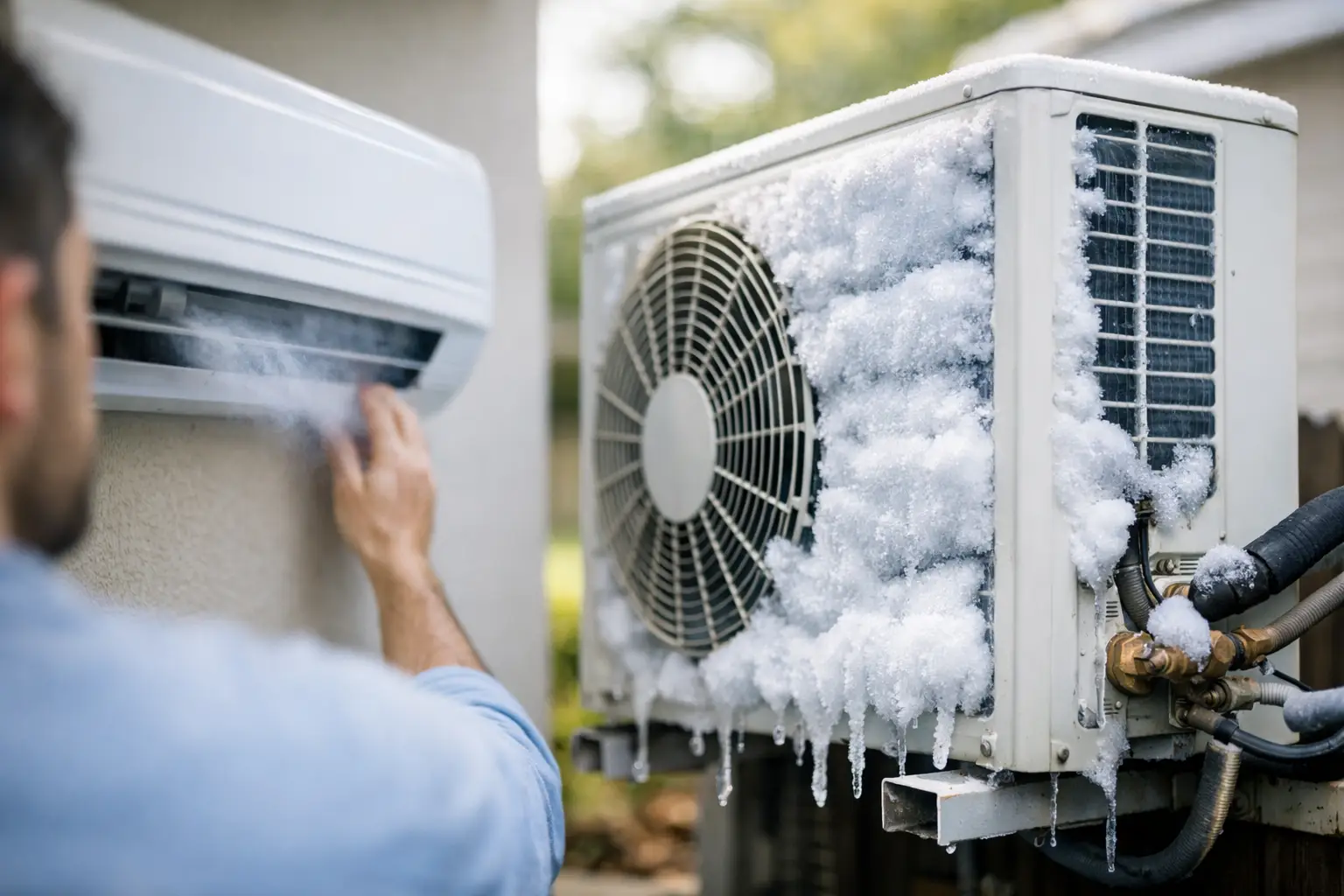
You set the thermostat expecting cool air, then notice weak airflow, warmer rooms, or even ice building up on the indoor unit or refrigerant line. If you’re asking, why is my AC freezing, the short answer is that your system is not moving heat the way it should. An air conditioner can freeze when airflow is restricted, refrigerant is low, or a key component is not working correctly.
A frozen AC is never something to ignore. It may start as a comfort problem, but it can turn into compressor damage, water leaks, higher energy bills, and a complete loss of cooling. The good news is that the ice itself is usually a symptom. Once the real cause is identified, the repair is often straightforward.
Why is my AC freezing if it’s supposed to cool?
Your air conditioner cools by absorbing heat from indoor air as warm air passes over the evaporator coil. That coil naturally gets cold, but it should not get so cold that moisture on it turns into a layer of ice. When airflow drops too low or refrigerant pressure is off, the coil temperature can fall below freezing. Then condensation freezes, ice builds up, and the system has an even harder time doing its job.
That creates a cycle. Less airflow leads to more ice, and more ice blocks even more airflow. Homeowners often notice this as rooms that never seem to cool down, even though the AC runs for long stretches.
The most common reasons an AC freezes up
Dirty air filter
This is one of the most common causes and one of the easiest to overlook. A clogged filter chokes off the air your system needs to move across the evaporator coil. Without enough warm air passing over that coil, its temperature can drop too far and start freezing moisture.
If the filter looks packed with dust, replace it before doing anything else. Even a newer system can freeze if the filter has been neglected. In homes with pets, ongoing construction, or heavy AC use during Southern California heat, filters may need attention more often than expected.
Blocked or closed vents
Many people close vents in unused rooms thinking it will save energy. In some systems, that can reduce airflow enough to create pressure problems and contribute to coil freezing. Furniture, rugs, or curtains blocking return or supply vents can have a similar effect.
It depends on the system design, so not every closed vent leads to a freeze-up. But if several vents are shut at once, it is worth correcting.
Dirty evaporator coil
Even when the filter is changed regularly, the evaporator coil can still collect dust over time. A dirty coil acts like insulation. It interferes with heat transfer and can cause temperatures to drop too low at the coil surface.
This is not usually a DIY cleaning job. The coil is delicate, often difficult to access, and easy to damage. If the system is freezing repeatedly, a technician should inspect and clean it properly.
Low refrigerant
Low refrigerant is another major reason people ask why is my AC freezing up. Refrigerant does not get “used up” in normal operation, so if levels are low, there is usually a leak somewhere in the system. Low charge changes pressure inside the evaporator coil and can make it cold enough to form ice.
You might also notice hissing, bubbling, longer run times, or reduced cooling performance. This is not something to top off and forget. If there is a leak, the leak needs to be found and repaired, and then the system should be charged to manufacturer specifications.
Blower problems
Your blower motor is responsible for moving air through the duct system. If the blower is failing, running weakly, or not operating at the right speed, the coil may not get enough airflow to stay above freezing.
Sometimes the issue is the motor itself. Other times it is a capacitor, control board, belt in older systems, or wiring fault. From the outside, it may look like a freezing issue, but the real problem is air movement.
Clogged condensate drain or moisture issues
In some cases, drainage problems can contribute to excessive moisture around the coil area. While that is not the most common root cause of freezing, it can make the problem worse and lead to water damage once the ice melts.
If your indoor unit is freezing and leaking water, there may be more than one issue happening at once.
Running the AC when outdoor temperatures are too low
Air conditioners are designed to operate within certain temperature ranges. If the AC runs during unusually cool evenings or mild weather, especially without proper controls, the system can freeze.
This is more common in commercial spaces or homes where the thermostat gets set low for long periods. It is not the first cause most homeowners should assume, but it does happen.
What you should do first when your AC freezes
Start by turning the system off at the thermostat. If your thermostat allows it, switch the fan to ON so air can continue moving and help thaw the ice. Do not keep trying to run cooling mode while the coil is frozen. That can put extra strain on the compressor.
Next, check the air filter. If it is dirty, replace it. Then look at your vents and make sure they are open and not blocked. These are safe first steps and can sometimes solve the issue if poor airflow is the only problem.
Give the system time to thaw completely. Depending on how much ice has formed, that can take several hours. Some homeowners are surprised by how long it takes. Starting the AC too soon can send you right back to the same problem.
What not to do
Do not chip away ice with a tool or try to force open panels you are not familiar with. Evaporator coils and refrigerant lines can be damaged easily, and what seems like a simple fix can become a more expensive repair.
Do not assume adding refrigerant is a routine maintenance step. If refrigerant is low, there is a problem that needs to be diagnosed properly.
It is also best not to ignore the issue if the system starts working again after thawing. A freeze-up that happens once can happen again, and usually at the worst possible time.
When to call for professional AC repair
If you replaced the filter, opened the vents, allowed the system to thaw, and it freezes again, it is time for a professional inspection. The same goes for signs of refrigerant loss, electrical issues, blower trouble, water leaks, or poor cooling that does not improve.
A trained HVAC technician can check refrigerant pressure, inspect the evaporator coil, test airflow, verify blower performance, and identify the root cause instead of just treating the symptom. That matters because two systems can show the same ice buildup for completely different reasons.
For homeowners and property managers, fast diagnosis is especially important in hot weather. In places like the San Fernando Valley, an AC that struggles during peak heat does not usually get better on its own.
Can a frozen AC damage the system?
Yes. The biggest concern is often the compressor. When airflow and refrigerant conditions are wrong, the entire cooling cycle is affected. If the system keeps running while frozen, it can create stress that shortens equipment life and leads to major repair costs.
There is also the issue of water. When the ice melts, excess water can overflow the drain system or leak around the air handler. That can damage surrounding materials and create indoor moisture problems.
How to keep it from happening again
The best prevention is regular maintenance and paying attention to early warning signs. Replace filters on schedule, keep vents open, and do not ignore weak airflow or longer cooling cycles. If your AC has needed refrigerant before, make sure the cause was actually repaired and not temporarily covered up.
Professional maintenance helps catch coil buildup, blower wear, drainage issues, and performance problems before they turn into a frozen system on a hot day. For many property owners, that is the difference between a routine service visit and an urgent breakdown.
If you are wondering why is my AC freezing, the answer is usually not the ice itself. It is the airflow, refrigerant, or component issue behind it. Getting that diagnosed early gives you the best chance of protecting your comfort, your equipment, and your repair budget.
If your AC is freezing up more than once, trust what the system is telling you. Small warning signs rarely stay small for long.