
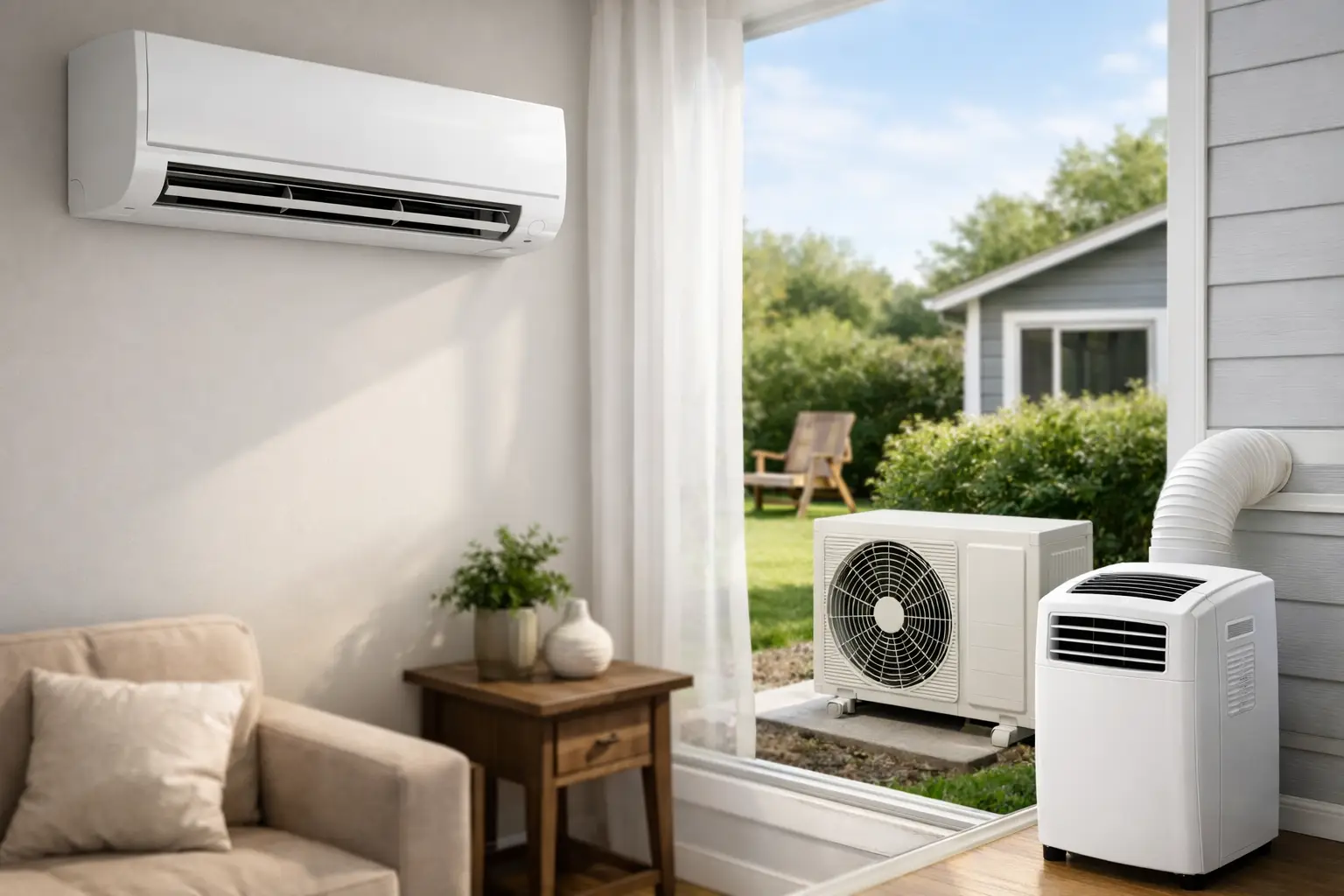
A small home does not automatically need a small air conditioner. In Southern California, a compact house with west-facing windows, limited insulation, or an open floor plan can gain heat quickly. The best AC units for small homes are the ones sized for the home’s actual cooling load, installed correctly, and matched to how you use each room.
Buying more capacity than you need can leave rooms clammy, increase cycling, and add unnecessary equipment cost. Buying too little can mean an AC that runs constantly during a hot San Fernando Valley afternoon without ever delivering the comfort you expected. The right choice starts with the layout, existing ductwork, electrical setup, insulation, and the number of rooms that need dependable cooling.
Best AC Units for Small Homes: Start With the Layout
For many small homes, the central question is not simply how many square feet you have. It is whether the home needs one cooling zone or several. A studio, guest house, ADU, or one-bedroom home with an open layout may cool effectively with one properly placed system. A small home with closed bedrooms, a long hallway, or a second-story room often needs a different approach.
Ceiling height matters as well. So do windows, attic conditions, kitchen heat, occupancy, and direct sun exposure. A 900-square-foot home in a shaded area will have very different needs than a 900-square-foot home with large south- and west-facing glass.
A professional load calculation is more reliable than choosing equipment from a basic square-footage chart. Those charts can be useful for a general starting point, but they cannot account for the conditions that make one small home easy to cool and another difficult.
Ductless Mini-Splits for Flexible Room-by-Room Comfort
Ductless mini-split systems are often an excellent choice for small homes without existing ductwork. They use a compact outdoor unit connected to one or more indoor air handlers. Each indoor unit serves a specific area and can be controlled separately.
This zoning is valuable when a homeowner spends most of the day in one room, wants cooler bedrooms at night, or has a converted garage or addition that never stays comfortable with the rest of the house. Rather than conditioning every square foot the same way, a ductless system lets you direct cooling where it is needed.
Mini-splits can also be highly efficient because they avoid the duct losses common in older or poorly sealed duct systems. Many heat-pump mini-splits provide heating as well, which can be a practical year-round option in Los Angeles-area homes with mild winters.
The trade-off is visibility. Indoor wall-mounted units are noticeable, and placement needs to be planned carefully for air distribution, drainage, service access, and appearance. Some homeowners prefer ceiling cassettes or concealed ducted indoor units, but those options may require more construction and a higher installation budget.
Central Air Conditioning When Ductwork Is Already in Good Shape
Central air conditioning can be the right fit for a small home that already has well-designed, properly sized ductwork. It provides a familiar whole-home solution, keeps indoor equipment mostly out of sight, and distributes air through registers in each room.
However, existing ducts should not be assumed to be ready for a new system. Older ducts may leak conditioned air into the attic, have inadequate return-air capacity, or be poorly balanced. Installing a high-efficiency condenser without correcting those issues can limit performance and leave certain rooms warmer than others.
For a small house, a compact central system may make sense when the duct system is sound and the homeowner wants consistent cooling throughout the home. Pairing the system with a programmable or smart thermostat can improve control, but thermostat settings cannot solve an oversized unit or airflow problem.
If ducts need major replacement, compare the full cost and benefits of a central system with a ductless or ducted mini-split option. The lowest initial equipment price is not always the best long-term value.
Ducted Mini-Splits for a Cleaner Look
A ducted mini-split combines some of the efficiency advantages of ductless technology with the discreet appearance of central air. Instead of large wall-mounted heads in every room, a compact indoor air handler can serve short duct runs to several spaces.
This option can work especially well in small homes undergoing a remodel, ADU projects, or homes where limited attic or ceiling space makes a conventional central system impractical. It may also offer better room-to-room coverage than a single wall-mounted unit in a home with separated bedrooms.
The design is more specialized, so installation quality is critical. The ducts, returns, condensate drain, refrigerant lines, and electrical connections all need to support the selected equipment. A careful consultation helps determine whether the added construction work is worthwhile for the home.
Window and Portable Units Have a Place, but Know Their Limits
Window AC units can be a reasonable short-term solution for a single bedroom, rental situation, or a room that needs temporary relief. They are typically less expensive upfront and do not require permanent HVAC installation. The drawbacks are noise, blocked window space, appearance, security considerations, and uneven comfort outside the room they serve.
Portable AC units are usually the least effective option for cooling an entire small home. Even dual-hose models can be useful in limited circumstances, but they take up floor space, require a window exhaust connection, and tend to be louder than built-in options. A single-hose portable unit can also pull warm outdoor air into the home as it exhausts indoor air.
For a homeowner planning to stay in the property, it is worth comparing a temporary unit’s ongoing energy use and limitations with a professionally installed system designed for the space.
Size the System for Comfort, Not Just BTUs
Air conditioner capacity is often discussed in BTUs or tons, but bigger is not better. An oversized AC cools the air too quickly and shuts off before it removes enough humidity. Although Southern California is generally dry, indoor humidity still affects comfort, particularly during coastal moisture, rainy periods, and in homes with limited ventilation.
Short cycling can also increase wear on components and create larger temperature swings. An undersized system has the opposite problem: it may run for long periods, struggle during heat waves, and fail to maintain the desired temperature in the warmest rooms.
A qualified HVAC technician should evaluate the home’s construction, insulation, window orientation, duct condition, occupancy, appliances, and airflow. This process helps identify the capacity and configuration that will provide stable, efficient comfort rather than simply selecting the largest unit within a budget.
Do Not Overlook Electrical Capacity and Installation Details
A new air conditioner is only as dependable as the installation behind it. Small homes sometimes have older electrical panels or limited capacity for new dedicated circuits. Before selecting a system, verify that the electrical service can safely support it and that permits or code requirements are addressed where applicable.
Proper refrigerant charging, condensate drainage, airflow setup, and line-set installation are equally important. A system can be premium equipment on paper yet perform poorly if the installation is rushed. For mini-splits, indoor-head placement and drainage are especially important. For central systems, duct sealing and return-air design can make a major difference in comfort and efficiency.
Choose a licensed and insured contractor who explains the options clearly, provides equipment recommendations based on the home, and stands behind the workmanship. Candid Heating & Air Conditioning can evaluate small-home cooling needs and help homeowners compare solutions without pushing a one-size-fits-all answer.
Plan for Maintenance From Day One
Even the best AC choice needs routine care. Filters should be checked regularly, outdoor units need clear airflow, and drain lines should be kept clean. Annual professional maintenance can catch electrical issues, refrigerant concerns, airflow restrictions, and worn components before they become an inconvenient breakdown on a hot day.
For small homes, comfort should feel simple: cool rooms when you need them, reasonable operating costs, and equipment you can rely on. A thoughtful in-home evaluation before installation is the best way to make that happen.