
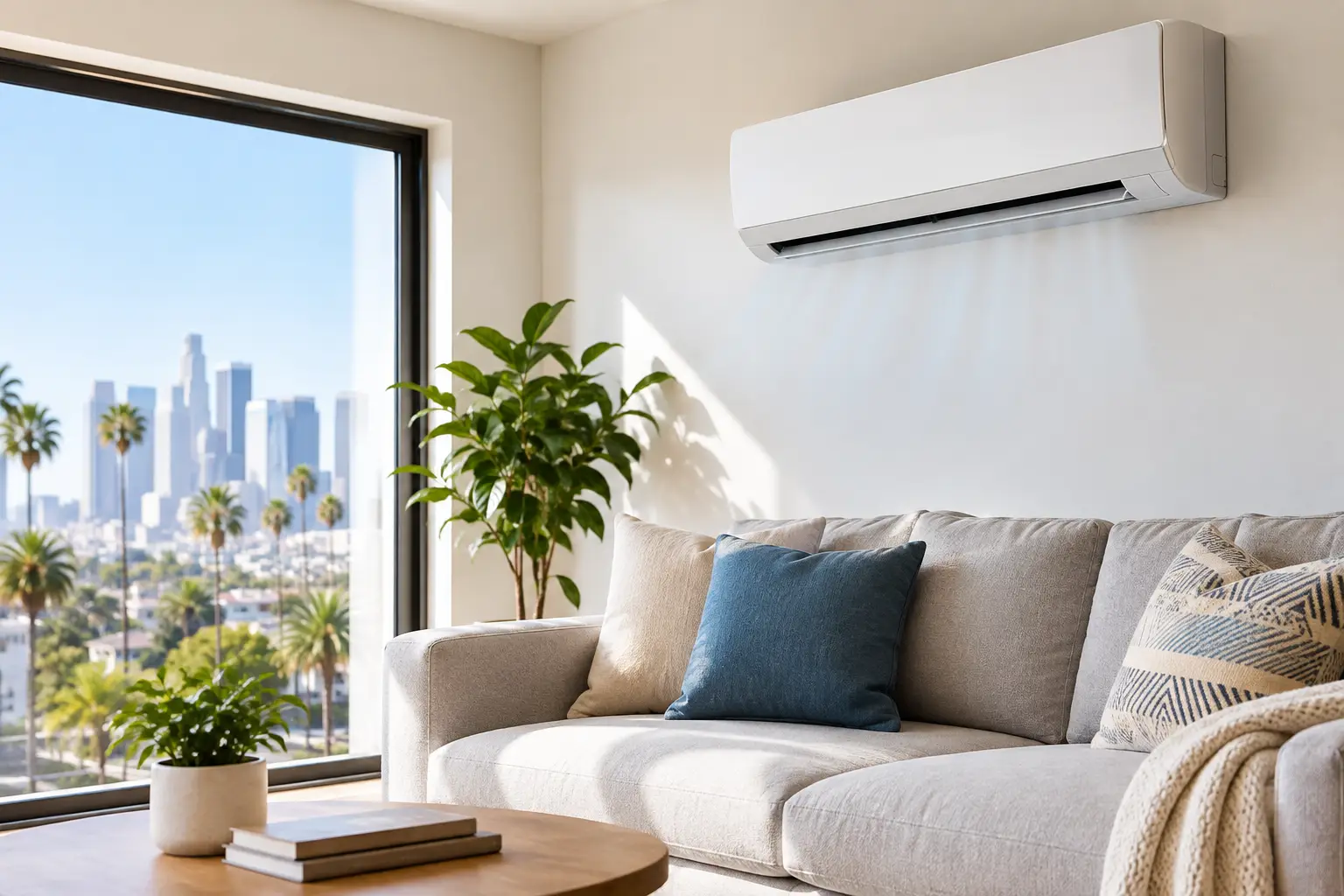
A hot San Fernando Valley afternoon can expose every weak point in a home’s cooling system. One bedroom stays stuffy, a garage office becomes unusable, or an older house has no ductwork at all. This ductless cooling options guide explains the systems that can cool those spaces without the cost and disruption of adding central air ducts.
Ductless cooling is not one product category with one right answer. A small portable unit may offer short-term relief, while a professionally installed mini-split can provide efficient, quiet comfort for years. The best choice depends on the space, electrical capacity, insulation, how often the area is used, and whether cooling is needed in one room or throughout the property.
Ductless Cooling Options Guide: Start With the Space
Before comparing equipment, define the problem. A system for a 150-square-foot bedroom is very different from one for a sun-facing living room, a converted garage, or a small commercial suite. Square footage matters, but it is not the only sizing factor.
Ceiling height, window exposure, insulation, occupancy, appliances, and local summer temperatures all affect the cooling load. An oversized unit can cool too quickly without removing enough humidity, cycling on and off more than necessary. An undersized unit may run continuously and still leave the room uncomfortable. Professional load calculations help avoid both problems.
For Los Angeles-area properties, it is also worth considering the building itself. Many homes have additions, older electrical panels, rooms over garages, or layouts where existing central air does not reach evenly. Ductless systems are especially useful when one part of the property needs targeted comfort without replacing the entire HVAC system.
Mini-Split Systems: The Long-Term Ductless Choice
A ductless mini-split uses an outdoor condenser connected to one or more indoor air handlers. Refrigerant lines, electrical wiring, and a condensate drain pass through a small opening in the exterior wall. The indoor unit delivers cooled air directly to the room, usually through a wall-mounted, ceiling-mounted, or concealed cassette-style unit.
For many homeowners, a mini-split is the strongest option when a room needs regular cooling. Modern systems are quiet, energy-efficient, and able to maintain a more consistent temperature than portable or window equipment. Most heat-pump mini-splits can also provide heating, which is useful during Southern California’s cooler winter nights.
Single-Zone Mini-Splits
A single-zone system serves one indoor area with one outdoor unit. It is often a practical fit for a primary bedroom, home office, detached studio, ADU, enclosed patio, or garage conversion. If the central system works well in the main house but one room remains hot, a single-zone mini-split can address that specific comfort issue.
The trade-off is that it is a permanent installation and requires professional design and installation. Proper line-set routing, drainage, electrical connections, outdoor-unit placement, and system charging all affect performance and warranty coverage. It is not a job to treat like a basic appliance installation.
Multi-Zone Mini-Splits
A multi-zone system connects several indoor units to one outdoor condenser. This arrangement can cool separate bedrooms, offices, or tenant areas while allowing each zone to have its own temperature setting. It can be a good match for homes without ducts, additions where duct extensions are impractical, or small businesses that need independent control in different rooms.
Multi-zone equipment saves exterior space compared with installing several outdoor condensers, but it is not automatically the least expensive approach. Installation complexity, refrigerant-line distances, and the number of indoor heads can raise the project cost. In some layouts, separate single-zone systems may offer better performance or service flexibility. A site evaluation should determine which design makes sense.
Window Air Conditioners: Simple but Limited
Window units remain a practical option for renters, temporary needs, or rooms that only need occasional cooling. They are generally less expensive upfront than a mini-split and can be installed quickly when the window type and electrical outlet are suitable.
Their limitations become more noticeable in frequently used rooms. Window units can be noisy, block natural light, reduce window security, and create air leaks if they are not installed carefully. They also cool only the immediate area and may struggle with large rooms or open floor plans. A poorly supported unit can damage a window frame or create a safety concern.
For a short-term solution, a correctly sized Energy Star-rated window unit can be reasonable. For a bedroom, office, or rental unit used daily, the lower initial cost should be weighed against sound levels, appearance, efficiency, and expected replacement frequency.
Portable Air Conditioners: Useful for Short-Term Relief
Portable air conditioners sit on the floor and vent warm air through a hose placed in a window. They are easy to move and do not require a unit to be mounted in the window, which makes them appealing in apartments or spaces with restrictive building rules.
However, portability comes with compromises. Most portable units take up floor space, require regular draining or condensate management, and can be louder than other options. Single-hose models often pull conditioned indoor air out of the room as they exhaust heat, which can draw hot outside air back into the house through gaps. Dual-hose models generally perform better, but they still rarely match the efficiency and quiet operation of a properly installed mini-split.
Portable ACs work best for temporary cooling, emergencies, or situations where no permanent installation is allowed. They should not be expected to solve a whole-home cooling problem.
Evaporative Coolers: Climate and Ventilation Matter
Evaporative coolers, sometimes called swamp coolers, cool air by passing it over water-saturated pads. They use less electricity than compressor-based air conditioning and can work well in very dry conditions.
Their effectiveness drops as humidity rises. They also require open windows or other exhaust paths to release indoor air, so they are not designed to operate like a sealed central AC system. Water use, regular pad maintenance, and mineral buildup are additional considerations.
In parts of Southern California with dry heat, evaporative cooling may be worth evaluating for workshops, garages, or certain open spaces. It is usually less suitable for people who need precise indoor temperature control or for buildings where outside dust, smoke, or allergens make open-window ventilation undesirable.
What Installation Quality Changes
A ductless system can be excellent equipment and still disappoint if it is installed incorrectly. Refrigerant leaks, poor drainage, improper electrical work, oversized equipment, or an indoor head placed in the wrong location can lead to weak performance, water damage, noise, and higher utility bills.
Indoor unit placement should allow air to circulate across the occupied area without blowing directly on a bed, desk, or seating area. Outdoor units need adequate clearance for airflow and service access. Condensate drains must be routed correctly, especially when an air handler is installed above finished walls or ceilings.
For multi-zone projects, the design must account for how rooms will be used at the same time. A system that looks adequate on paper may not perform as expected if every zone calls for maximum cooling during a heat wave. This is where experienced HVAC guidance matters more than simply choosing the highest advertised capacity.
Costs, Efficiency, and Maintenance Expectations
The least expensive equipment is not always the least expensive choice over its service life. Window and portable units have lower purchase costs, but their energy use, noise, and shorter lifespan may make them less appealing for daily use. Mini-splits cost more to install, yet their variable-speed operation and zone control can reduce wasted cooling in unused rooms.
Maintenance is straightforward but necessary. Clean or wash mini-split filters regularly, keep outdoor units clear of leaves and debris, and schedule periodic professional service to inspect electrical components, refrigerant performance, drainage, and coils. Window and portable units also need filter cleaning and seasonal inspection. Neglected filters restrict airflow and force any system to work harder.
If your home already has central air, a ductless unit may still be a smart supplement rather than a replacement. Targeted cooling can help solve hot spots and reduce the temptation to lower the thermostat for the entire house just to make one room comfortable.
The right choice should fit how you actually use the space, not just the price tag on the equipment. For a lasting installation in a home, ADU, office, or rental property, Candid Heating & Air Conditioning can assess the room, electrical and installation requirements, and your budget before recommending a ductless solution built for dependable comfort.