
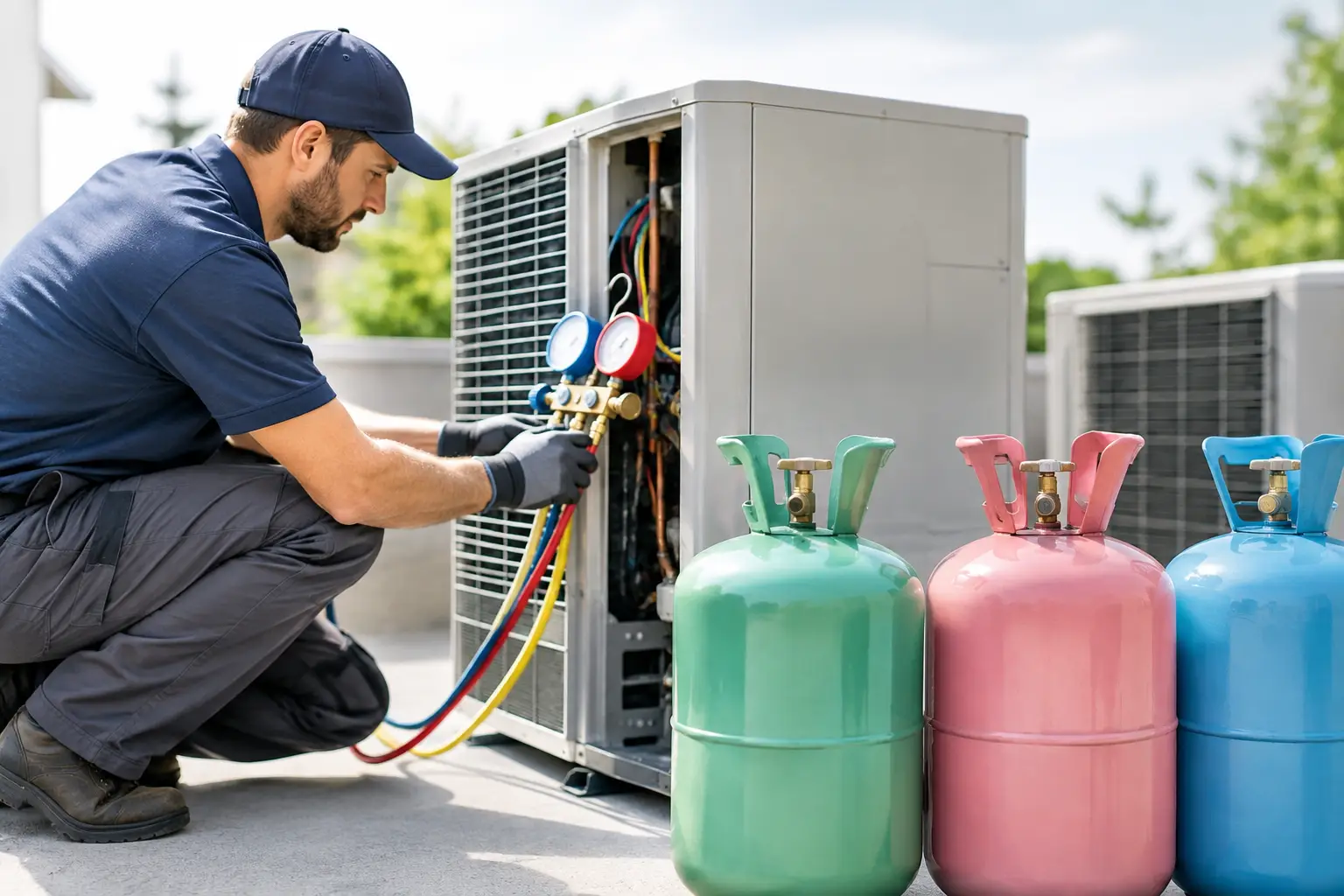
A refrigerant label may seem like a small detail when your air conditioner is running well. In 2026, it can affect the equipment available for replacement, the cost and timing of major repairs, and how a new system is installed. HVAC refrigerants 2026 are a practical concern for homeowners, property managers, and business owners who want to protect a major comfort investment without making rushed decisions.
The main point is reassuring: an existing air conditioner does not suddenly stop working because it uses an older refrigerant. However, the market is changing. New equipment is moving away from higher-global-warming-potential refrigerants, and that shift makes professional system selection, installation, and maintenance more valuable than ever.
What Is Changing With HVAC Refrigerants in 2026?
Federal refrigerant rules are reducing the use of hydrofluorocarbons, or HFCs, with higher global warming potential. For many years, R-410A has been the standard refrigerant in residential central air conditioners, heat pumps, and many light commercial systems. It replaced R-22 in most new equipment, but it is now being succeeded by lower-impact options in newly manufactured systems.
The refrigerants many property owners will hear about are R-454B and R-32. These are used in certain new air conditioning and heat pump designs because they have a lower global warming potential than R-410A. Equipment manufacturers are making their own product decisions, so the correct refrigerant depends on the brand, model, capacity, and type of system being installed.
This is not a one-size-fits-all equipment change. A replacement system must match the property, the existing ductwork and electrical setup, local code requirements, and the comfort needs of the people using the building. For a Los Angeles home with uneven cooling, for example, correcting airflow or duct issues may matter just as much as choosing the refrigerant in the outdoor unit.
R-410A Systems Can Still Be Repaired
If your current system uses R-410A, there is no need to replace it solely because newer refrigerants are entering the market. Properly operating R-410A equipment can continue to be serviced and maintained. Technicians can still diagnose electrical problems, replace approved components, clean coils, address drainage issues, and repair many refrigerant leaks.
What may change over time is the availability and price of R-410A. As production and import allowances decline, supply conditions can shift. That does not mean every repair becomes unreasonable, but it does mean a significant leak in an older system deserves a careful cost comparison.
A dependable contractor should explain the condition of the equipment before recommending replacement. Age, efficiency, repair history, coil condition, compressor performance, refrigerant loss, and expected repair cost all matter. A system with a minor repair and several useful years left may be worth fixing. A system with a major refrigerant leak, a failing compressor, and repeated service calls may be a better candidate for replacement.
Do Not Mix Refrigerants or Retrofit Without Approval
One of the most important rules for property owners is simple: refrigerants are not interchangeable. R-410A cannot be replaced with R-454B or R-32 as a quick upgrade. These refrigerants operate under different design requirements, use different equipment specifications, and may require components and safety measures that an older unit does not have.
Trying to use an unapproved refrigerant can damage the system, create safety concerns, void manufacturer coverage, and lead to expensive corrective work. Refrigerant handling is also regulated and should be performed by qualified HVAC professionals using the proper recovery equipment and procedures.
The same caution applies to R-22 systems. R-22 has been phased out of new production and import for years, so repairs can be more expensive when refrigerant is needed. Some older units can still be repaired with available reclaimed refrigerant, but replacement often makes more financial sense when a major component fails or a substantial leak is found.
Why New Refrigerants Change Installation Requirements
R-454B and R-32 are commonly classified as A2L refrigerants. In practical terms, they are considered mildly flammable under specific conditions. This does not mean a properly installed new system is unsafe. It means the equipment and installation process must follow updated manufacturer instructions and applicable safety codes.
New systems may include refrigerant detection features, specific ventilation considerations, updated service procedures, and equipment labeling. The installer must use compatible tools, follow charging requirements precisely, and verify that the system is operating correctly before it is placed into service.
That is why the lowest installation quote is not always the best value. A new HVAC system is not simply a piece of equipment set in place. Correct line-set sizing, electrical work, drainage, airflow, duct condition, thermostat compatibility, and startup testing all influence efficiency, comfort, and equipment life. For commercial properties, the stakes can be even higher because poor installation can affect tenant comfort, operating costs, and business continuity.
How to Decide Between Repair and Replacement
There is no fixed age when every air conditioner should be replaced. The right decision depends on the system and the property. Still, a few situations call for a serious replacement discussion.
Consider a professional evaluation if your system has a confirmed refrigerant leak, needs a major compressor or coil repair, has frequent breakdowns, or no longer cools the space evenly. Also consider replacement if utility bills have risen without another clear explanation, the unit is nearing the end of its expected service life, or parts are becoming difficult to obtain.
For a newer R-410A system with a manageable repair, maintenance and repair may be the sensible choice. For an older unit with a costly refrigerant-related repair, installing a current-generation system can offer a more predictable path forward. The decision should include the total repair cost, likely future repairs, energy use, warranty coverage, and the comfort improvements a properly sized replacement could provide.
Property managers should also look beyond the immediate repair invoice. A planned replacement can often be scheduled around occupancy, business hours, budget cycles, and tenant needs. An emergency replacement during a Southern California heat wave gives everyone fewer options.
Questions to Ask Before Buying a New AC or Heat Pump
Before approving a replacement, ask which refrigerant the proposed system uses and why that model fits your building. Ask whether the equipment is properly sized through a load calculation rather than selected only by the size of the old unit. A larger system is not automatically better. Oversizing can lead to short cycling, uneven temperatures, and reduced humidity control.
You should also ask about the condition of existing refrigerant lines, ductwork, electrical capacity, condensate drainage, and thermostat controls. In some installations, existing components can be used if they meet the new equipment manufacturer’s requirements. In others, upgrades are necessary for safety, performance, or warranty compliance.
Finally, review labor warranty terms, manufacturer coverage, expected maintenance needs, and the scope of work in writing. Clear answers before installation help prevent surprises after the equipment is running.
Maintenance Matters More During the Transition
Refrigerant transitions make regular maintenance even more useful, not less. Maintenance does not eliminate every repair, but it gives a technician the chance to identify worn electrical parts, dirty coils, airflow restrictions, drainage problems, and early signs of refrigerant loss before they become a larger failure.
For homes, a pre-season visit can help reduce the risk of losing cooling during the hottest part of the year. For businesses and multi-unit properties, scheduled maintenance supports more predictable budgeting and can help prevent comfort complaints from becoming urgent calls.
If your air conditioner is older, struggling to cool, or facing a refrigerant-related repair, the best next step is a clear assessment from a licensed HVAC professional. Candid Heating & Air Conditioning can review the condition of your current system, explain the options in straightforward terms, and help you choose a repair or replacement plan that fits your property and budget.