
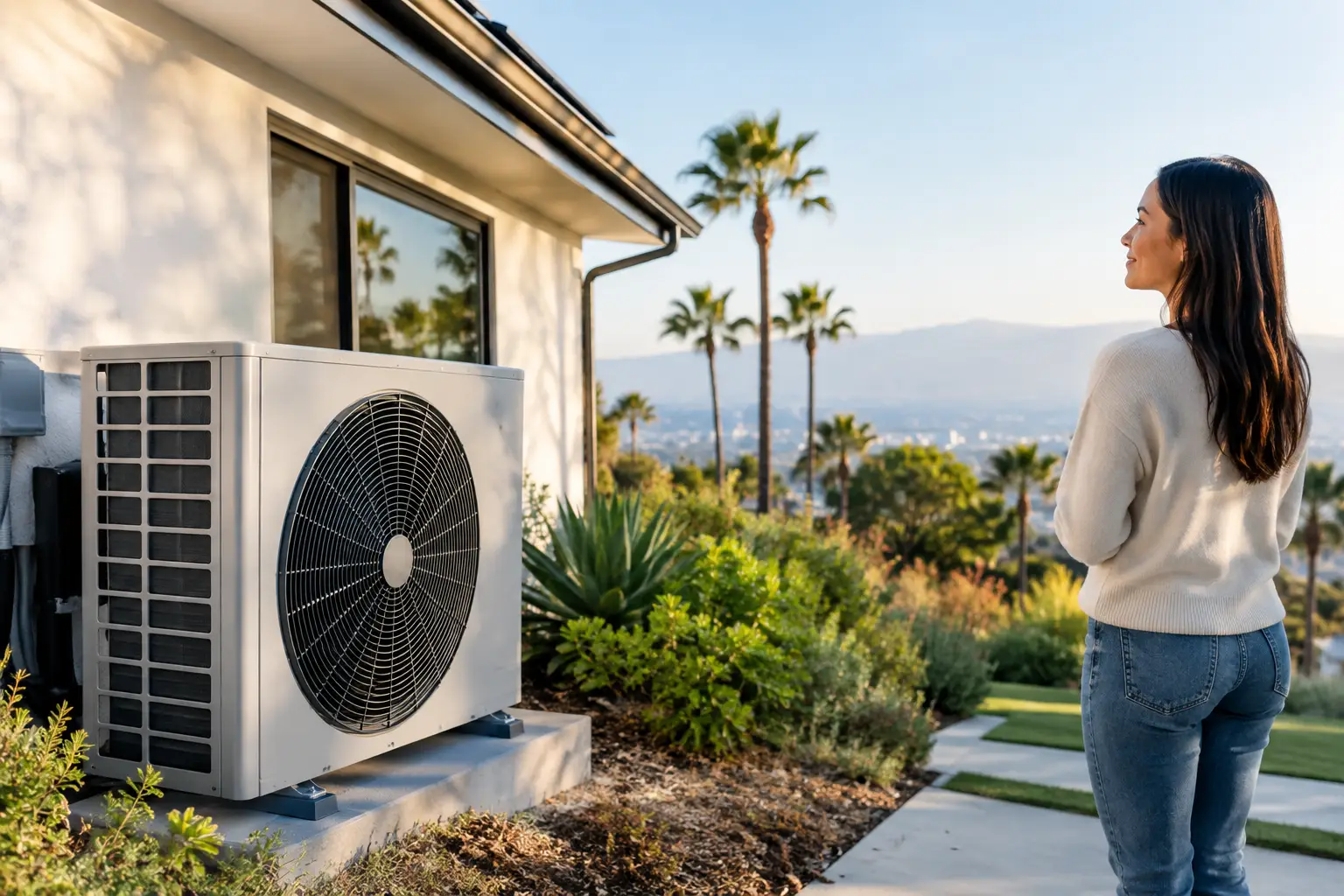
A heat pump used to be a specialty option that many Southern California property owners had heard of but rarely requested. That is changing. California heat pump adoption trends reflect a practical shift: homeowners and businesses want one efficient system that can cool a building through hot summers and provide dependable heat on cool winter mornings.
For Los Angeles and San Fernando Valley properties, the appeal is easy to understand. Air conditioning is already a necessity for many buildings, natural gas prices can be unpredictable, and aging furnaces eventually need replacement. A properly selected heat pump can address heating and cooling together. Still, a heat pump is not automatically the right answer for every property. Equipment selection, installation quality, electrical capacity, duct condition, and the building’s actual comfort needs all matter.
Why California Heat Pump Adoption Trends Are Growing
The largest driver is replacement timing. When a central air conditioner, furnace, or both begin requiring frequent repairs, property owners have an opportunity to reconsider the entire HVAC setup instead of replacing each piece with the same type of equipment. A heat pump combines air conditioning and heating functions, so it can be a sensible choice when both sides of a split system are near the end of their service life.
California’s broader push toward building electrification has also made heat pumps more visible. New construction requirements, utility programs, manufacturer options, and state and local incentives have all encouraged conversations about electric heating. Available rebates and tax incentives can change over time, have eligibility rules, and may depend on funding, income, equipment efficiency, or the location of the property. They should be viewed as a potential benefit, not the only reason to choose a system.
Comfort is another reason adoption is growing. Modern variable-speed heat pumps can operate at lower output for longer periods instead of cycling on and off as aggressively as older systems. When designed correctly, this can help maintain more even room temperatures, improve humidity control during cooling season, and reduce the hot-and-cold swings that frustrate many homeowners.
For commercial operators and property managers, electrification planning can be part of a longer capital plan. Replacing failed equipment in an emergency is rarely ideal. Evaluating heat pump options before a rooftop unit or furnace fails gives decision-makers time to review operating needs, tenant comfort, electrical upgrades, access requirements, and realistic installation scheduling.
Heat Pumps Make Sense in Southern California, With Conditions
Southern California’s relatively mild winter climate is favorable for air-source heat pumps. These systems move heat rather than create it through combustion. Even when outdoor temperatures feel chilly, a properly designed unit can pull heat from the outside air and bring it indoors. During summer, it reverses that process and removes heat from the building like an air conditioner.
That does not mean every heat pump installation will perform the same way. A unit that is too large may short-cycle, leaving rooms less comfortable and adding unnecessary wear. A unit that is too small may struggle during periods of extreme heat or unusually cold weather. The right answer comes from a professional load calculation, not from matching the size of the old equipment or choosing the largest unit available.
Ductwork is often part of the decision. Older ducts may leak conditioned air into attics, garages, or wall cavities. They may also be undersized for the airflow a new system needs. Installing high-efficiency equipment while leaving major duct problems unresolved can limit the comfort and savings a property owner expects. In some homes, a ducted central heat pump is the best fit. In others, ductless mini splits can serve additions, converted garages, individual offices, or homes with difficult-to-access ducts.
Electrical capacity deserves the same attention. A heat pump may require electrical work, especially if it is replacing gas heating and the panel is already near capacity. This is not a reason to rule out a heat pump prematurely. It is a reason to have the installation evaluated carefully, with the electrical scope and cost explained before work begins.
Operating Costs Depend on More Than the Equipment Label
A high-efficiency heat pump can reduce energy use, but utility bills depend on the local electric rate, gas rate, thermostat settings, insulation, duct leakage, occupancy, and how the system is maintained. A home with poor insulation and significant air leakage can still be expensive to heat and cool, even with new equipment.
Property owners should also compare the full system cost rather than focusing only on the outdoor unit. The complete project may include an indoor air handler or furnace coil, refrigerant lines, controls, duct modifications, electrical upgrades, permits, and commissioning. An honest proposal explains what is included and what conditions could affect the final scope.
What Is Changing in California Heat Pump Adoption
The market is becoming more varied. Early conversations often centered on replacing a gas furnace and air conditioner with a standard central heat pump. Today, property owners may consider several configurations based on the building and their priorities.
A traditional ducted heat pump is often a strong option for a home with serviceable existing ducts and a central system already in place. A ductless mini split may be a better answer for a room addition, a small multi-zone property, or a building where new ductwork would be disruptive. Multi-zone systems offer individualized room control, though they need thoughtful layout and should not be selected simply because they are electric.
Dual-fuel systems remain relevant for some properties. These systems pair a heat pump with a gas furnace, using the heat pump during milder weather and the furnace during colder conditions or when economics favor gas heat. They can be useful for homeowners who want a transition path, but they do not provide the same level of electrification as an all-electric system. The right configuration depends on comfort expectations, budget, available utilities, and long-term plans for the property.
There is also greater attention on indoor air quality. Heat pump replacements are often an opportunity to improve filtration, address return-air problems, upgrade thermostats, or add equipment designed for a property’s specific needs. Good indoor comfort is not just about reaching a set temperature. It is about airflow, filtration, noise levels, humidity, and dependable operation.
Questions to Ask Before Replacing Your System
Before selecting equipment, property owners should ask a contractor how the system size will be determined and whether the ductwork will be inspected. They should understand the expected electrical requirements, the efficiency rating of the proposed equipment, and whether permits are included in the job.
It is also reasonable to ask about warranty coverage, labor warranty terms, maintenance needs, and how the contractor handles service after installation. Heat pumps are proven HVAC equipment, but they are not maintenance-free. Filters still need regular attention, outdoor units need clear airflow, and annual professional service can help identify worn electrical components, refrigerant concerns, drainage issues, and performance changes before they become major repairs.
For rental properties and commercial spaces, ask how installation will affect occupants and business operations. Equipment placement, rooftop access, noise, condensate drainage, and scheduling can be just as important as equipment efficiency. A good plan protects comfort during the project instead of treating those details as an afterthought.
Installation Quality Is the Deciding Factor
The growth of heat pumps has created more choices, but it has also made qualified installation more important. Correct refrigerant charging, airflow setup, drainage, electrical connections, thermostat configuration, and system testing directly affect performance. A premium unit cannot compensate for poor sizing or careless workmanship.
Candid Heating & Air Conditioning approaches replacement decisions by looking at the property first, then recommending equipment that fits the space, comfort goals, and budget. For homeowners and business operators in the San Fernando Valley, that practical approach matters more than following a trend for its own sake.
A heat pump can be a smart long-term investment when the system is designed around the building rather than the sales pitch. If your current furnace or air conditioner is aging, the best next step is a clear evaluation while you still have time to make a well-informed choice.